
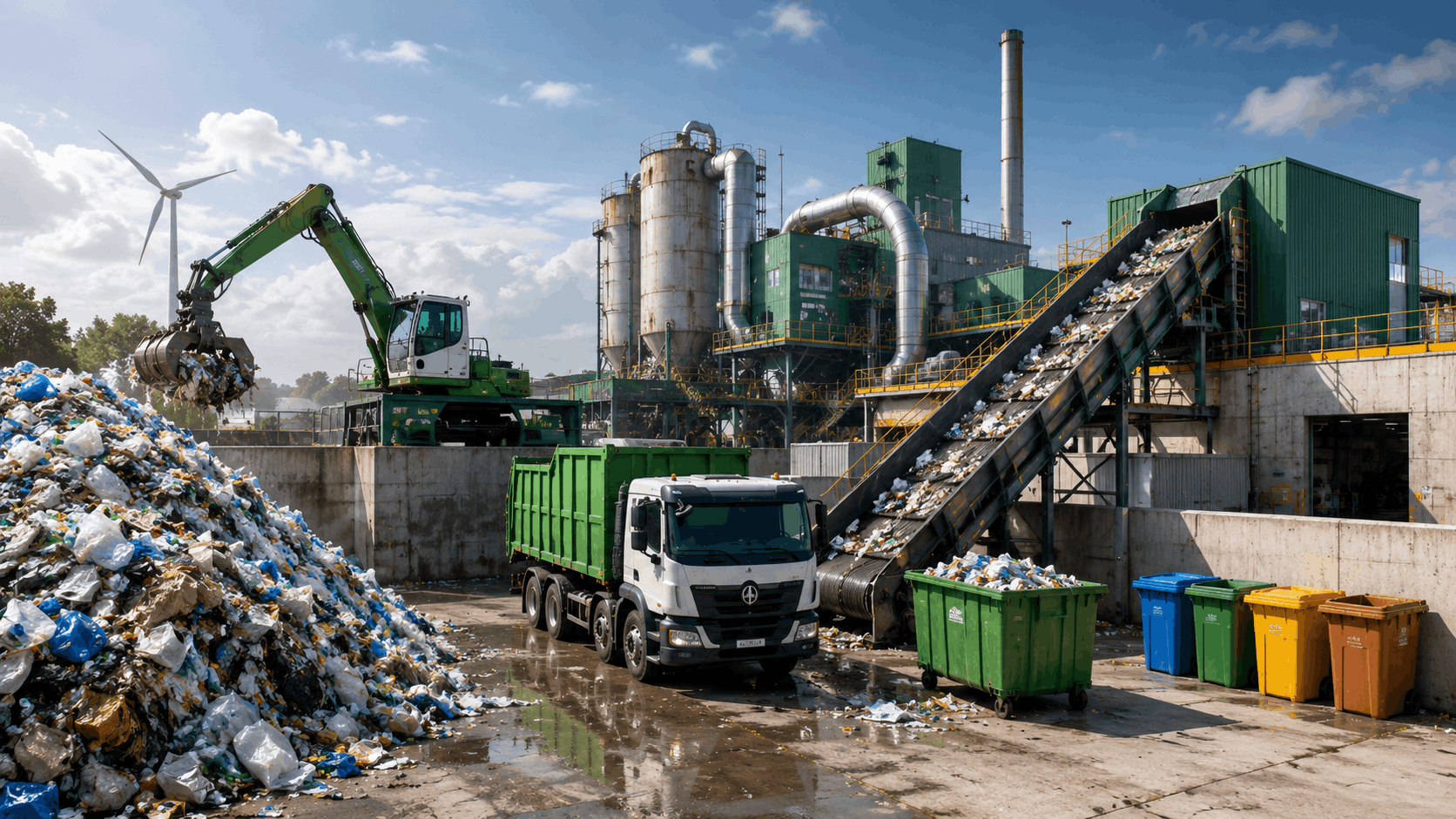
Waste management has become one of the fastest-growing industries in global business and finance because governments, corporations, and consumers are increasingly focusing on sustainability and environmental responsibility.
Today, rising concerns about:
- Plastic pollution
- Climate change
- Urban waste generation
- Recycling efficiency
- Green energy solutions
have pushed waste management into major global discussions.
Additionally, businesses worldwide are investing billions of dollars into recycling technology, waste-to-energy systems, and sustainable infrastructure projects. As a result, waste management is no longer just an environmental issue — it has become a major economic and investment sector.
Because of growing ESG (Environmental, Social, and Governance) investing trends, waste management companies are also gaining strong attention from investors and financial markets.
Table of Contents
What Is Waste Management and Why Is It Important?
Waste management refers to the collection, transportation, recycling, treatment, and disposal of waste materials in a safe and environmentally responsible way.
The industry manages several types of waste, including:
- Household waste
- Industrial waste
- Plastic waste
- Medical waste
- Electronic waste
Furthermore, proper waste management helps reduce pollution, improve public health, and protect natural resources.
As urban populations continue growing globally, countries must improve waste management systems to maintain environmental sustainability and economic stability.
How Waste Management Supports the Global Economy
Waste management plays a major role in supporting economic development and modern infrastructure.
The industry contributes through:
- Job creation
- Recycling businesses
- Renewable energy production
- Industrial waste processing
- Public sanitation services
Additionally, many countries now consider sustainable waste management essential for long-term economic planning and urban development.
Because of this, governments continue increasing investments in waste collection systems, recycling plants, and environmental technology projects.
Recycling Industry Growth and Business Opportunities
The recycling sector has become one of the most important parts of the global waste management industry.
Companies are increasingly focusing on:
- Plastic recycling
- Metal recovery
- Paper recycling
- Electronic waste processing
Furthermore, businesses are adopting circular economy models where materials are reused instead of discarded.
As sustainability becomes a corporate priority, recycling businesses continue attracting investment and long-term growth opportunities.
Meanwhile, consumers are also demanding environmentally responsible products and packaging solutions.
Waste-to-Energy Technology and Renewable Energy Expansion
Modern waste management companies are increasingly investing in waste-to-energy technologies.
These systems convert waste materials into:
- Electricity
- Heat energy
- Biofuels
- Renewable gas
Additionally, waste-to-energy projects help reduce landfill use while supporting renewable energy production.
As global energy demand continues rising, many governments are supporting cleaner energy alternatives and sustainable infrastructure investments.
Therefore, waste-to-energy technology may become one of the fastest-growing segments within the waste management industry.
Why Investors Are Interested in Waste Management Stocks
Investors are closely watching waste management companies because sustainability-focused industries are growing rapidly worldwide.
Several factors support investor interest:
- ESG investing growth
- Rising recycling demand
- Government environmental regulations
- Renewable energy expansion
- Long-term infrastructure projects
Furthermore, waste management businesses often generate stable recurring revenue through municipal and industrial contracts.
As a result, many financial analysts view the sector as a strong long-term investment opportunity.
Challenges Facing the Waste Management Industry
Although the industry continues expanding, waste management companies still face major challenges.
Important challenges include:
- Rising operational costs
- Increasing plastic pollution
- Limited landfill space
- Recycling inefficiencies
- Strict environmental regulations
Additionally, rapidly growing urban populations create higher waste generation levels across major cities worldwide.
Therefore, innovation and technology remain essential for improving efficiency and sustainability.
Technology and Innovation in Modern Waste Management
Technology is transforming the future of waste management and recycling industries.
Important innovations include:
- AI-powered waste sorting systems
- Smart recycling plants
- Automated waste collection vehicles
- Digital waste tracking systems
- Sustainable packaging technologies
Furthermore, artificial intelligence and automation help companies reduce operational costs and improve recycling efficiency.
As businesses continue investing in green technology, modern waste management systems may become even more advanced and profitable.
Future Outlook for the Waste Management Industry
The future of waste management looks strong because sustainability and environmental protection remain global priorities.
Several trends may support long-term industry growth:
- Expansion of green infrastructure
- Increasing recycling regulations
- Growth in renewable energy projects
- Higher environmental awareness
Additionally, corporations and governments are expected to continue investing heavily in sustainable business practices and environmental technology.
Because of this, waste management may remain one of the most important sectors in the future global economy.
Why Waste Management Matters in Business and Finance
Waste management has evolved into a major global business sector connected to sustainability, infrastructure, renewable energy, and long-term economic growth.
As environmental concerns continue increasing worldwide, governments, investors, and corporations are placing greater importance on recycling systems, green technology, and sustainable waste solutions.
Therefore, understanding waste management trends can provide valuable insights into the future of business, finance, environmental innovation, and global economic development.
