
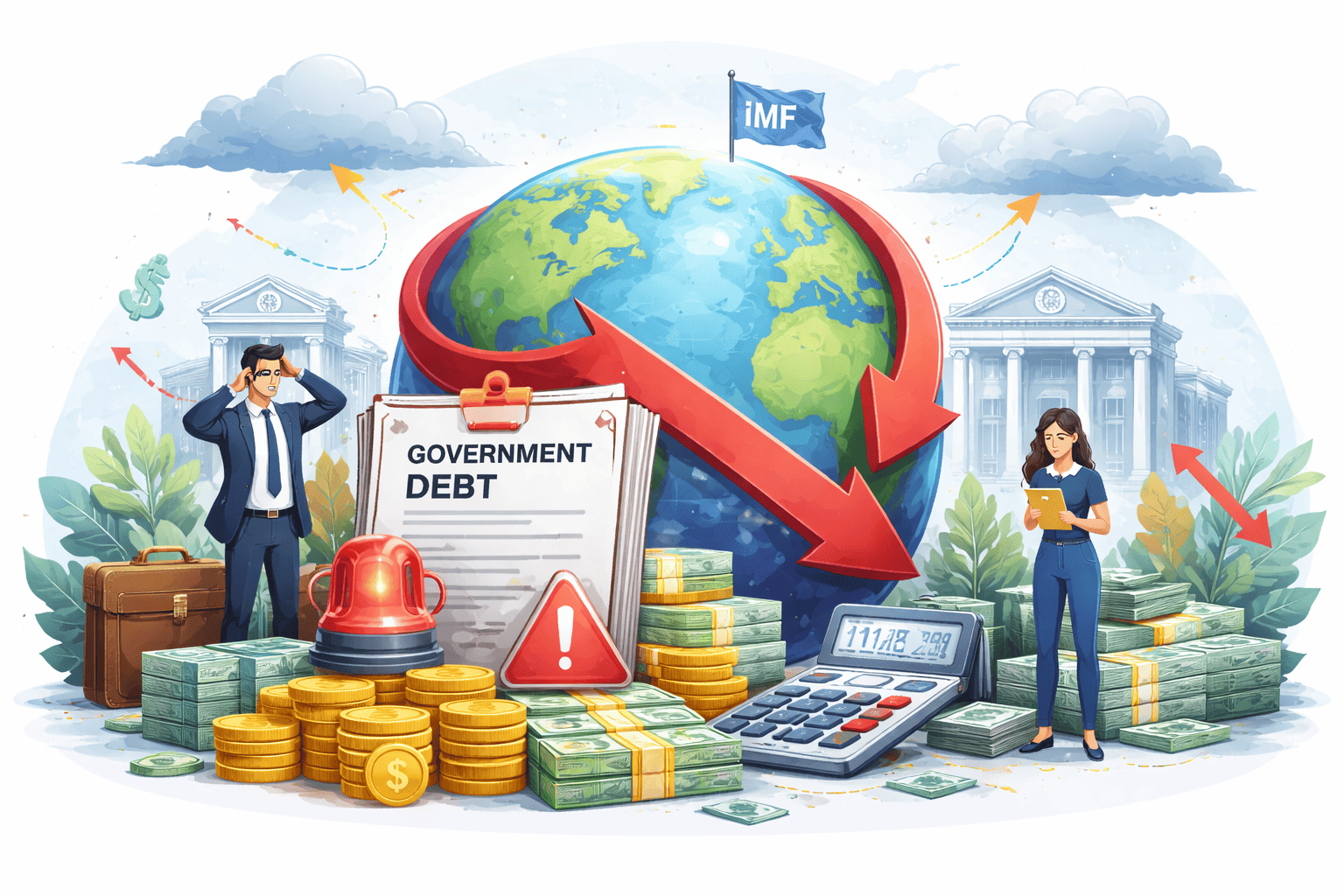
National debt has become one of the biggest concerns for governments, investors, and citizens worldwide. Recent IMF warnings on national debt highlight the growing pressure many countries face due to high borrowing, rising interest rates, and slower economic growth. Understanding these warnings is important because debt levels can impact taxes, inflation, jobs, and long-term financial stability.
In this article, we explain what the IMF warning means, why national debt is rising, and how it could affect economies around the world.
Table of Contents
What Is the IMF?
The International Monetary Fund (IMF) is a global financial organization that monitors the world economy, provides policy advice, and supports countries facing financial crises. The IMF regularly releases reports on growth, inflation, and public debt trends.
When the IMF issues warnings about national debt, markets and policymakers often pay close attention.
What Is National Debt?
National debt is the total amount of money a government owes to lenders. Governments borrow funds by issuing bonds or taking loans to finance spending when revenue from taxes is not enough.
National debt may increase because of:
- Economic recessions
- Higher public spending
- Emergency stimulus programs
- Wars or crises
- Rising healthcare and pension costs
- Lower tax revenue
Why Is the IMF Warning About National Debt?
The IMF has repeatedly warned that rising debt levels can create risks for many countries, especially when borrowing costs remain high.
Key concerns include:
1. Higher Interest Payments
As rates rise, governments must spend more money paying interest on debt. This can reduce funding for education, healthcare, and infrastructure.
2. Slower Economic Growth
Heavy debt burdens may discourage private investment and weaken long-term growth.
3. Vulnerability to Shocks
Countries with high debt may struggle during recessions, banking stress, or global emergencies.
4. Inflation Pressure
If governments rely too much on borrowing or money creation, inflation risks can increase.
Which Countries Face the Biggest Debt Challenges?
Debt issues vary by country, but advanced economies and emerging markets alike face pressure.
Commonly watched examples include:
- United States
- Japan
- Italy
- United Kingdom
- Several developing economies with foreign-currency debt
Each country’s risk depends on growth, tax revenue, political stability, and borrowing costs.
How National Debt Affects Citizens
IMF debt warnings are not just for governments—they can affect households too.
Possible impacts include:
- Higher taxes in the future
- Reduced public services
- Inflation and higher living costs
- Slower wage growth
- Increased unemployment during fiscal cuts
- Market volatility affecting savings and pensions
What Solutions Does the IMF Recommend?
The IMF often recommends balanced strategies rather than sudden austerity.
Typical policy suggestions include:
Fiscal Discipline
Governments may need to reduce deficits over time through better budgeting.
Economic Growth Reforms
Policies that improve productivity, investment, and employment help make debt more manageable.
Efficient Tax Systems
Broadening the tax base and improving compliance can raise revenue fairly.
Smart Public Spending
Prioritizing infrastructure, education, and healthcare can support long-term growth.
Can National Debt Trigger a Crisis?
High debt alone does not always cause a crisis. Some countries manage large debt loads successfully if they have:
- Strong economies
- Trusted institutions
- Stable currencies
- Low borrowing costs
- Credible fiscal plans
However, if investors lose confidence, borrowing costs can rise sharply.
What Investors Should Watch
If you follow markets, IMF debt warnings may signal future volatility.
Watch for:
- Bond yields rising
- Credit rating changes
- Currency weakness
- Inflation trends
- Government budget announcements
- Central bank policy decisions
The IMF warning on national debt reflects growing concern over how much many governments owe in a world of higher interest rates and uncertain growth. While debt can support economies during crises, long-term borrowing without credible plans creates risks.
For citizens and investors, understanding debt trends helps explain future tax policy, inflation risks, and market movements. Managing debt responsibly remains one of the biggest economic challenges of this decade.
