
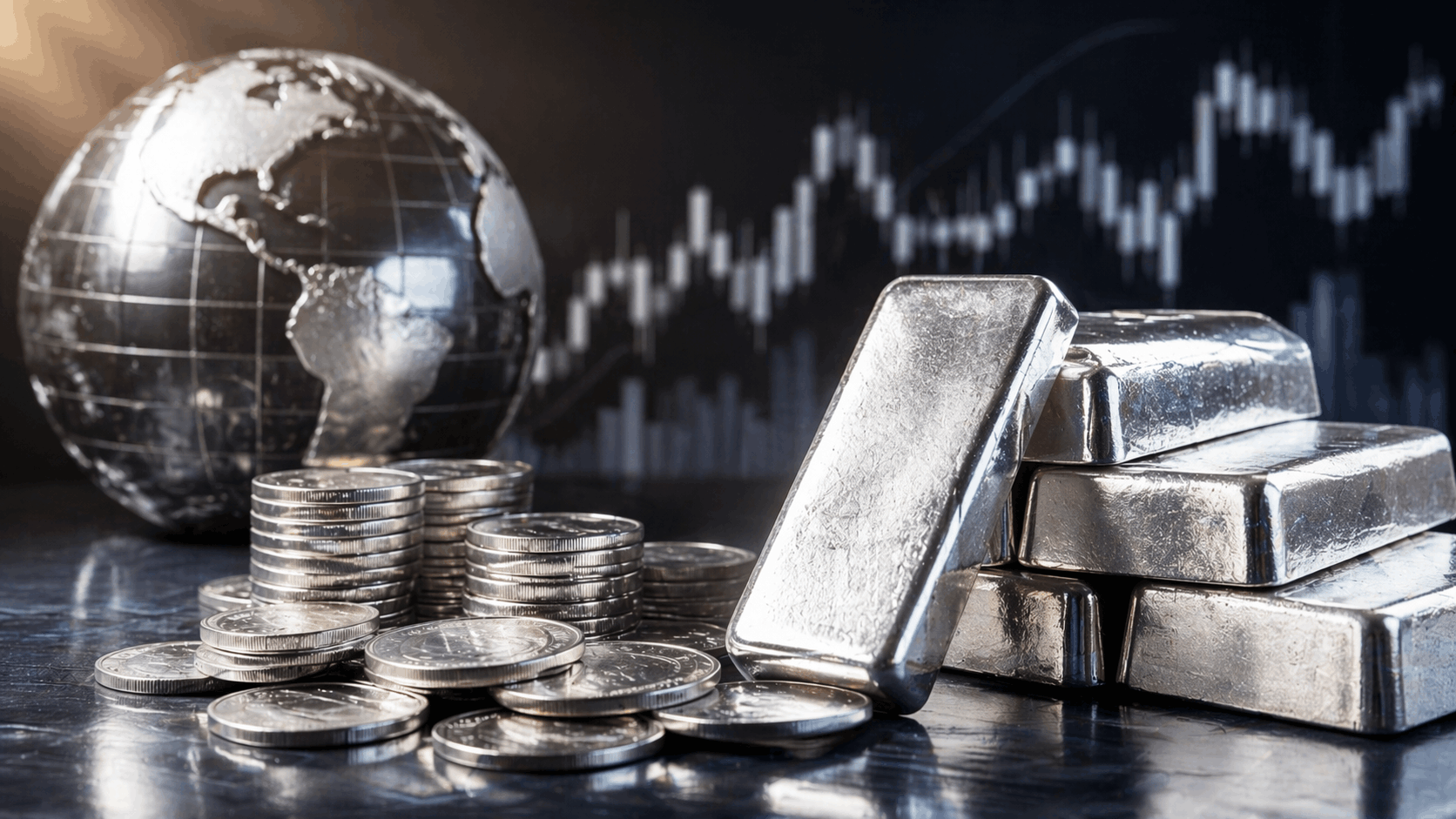
Silver is one of the most important precious metals in the global economy. It serves both as an industrial metal and a financial asset. Investors often compare silver with gold, yet silver offers unique advantages such as affordability and high growth potential. Therefore, understanding silver is essential for anyone interested in business and finance.
Table of Contents
- What Is Silver in Financial Markets?
- Why Silver Is Important in the Economy
- Factors Affecting Silver Prices
- Silver as an Investment Option
- Advantages of Investing in Silver
- Risks Associated with Silver Investment
- Role of Silver in Portfolio Diversification
- Future Outlook of Silver Market
- Key Takeaways
What Is Silver in Financial Markets?
Silver is a globally traded commodity that holds both intrinsic and market value. Investors buy silver in multiple forms such as physical bars, coins, or digital assets like ETFs. In addition, global pricing is influenced by institutions like the London Bullion Market Association, which helps standardize rates across markets.
Why Silver Is Important in the Economy
Silver plays a dual role in the modern economy.
First, it has strong industrial demand. It is widely used in electronics, solar panels, and medical devices. As a result, technological growth directly increases silver demand.
Second, silver acts as a financial asset. Investors use it as a hedge against inflation and economic instability. Moreover, its lower price compared to gold makes it more accessible for small investors.
Factors Affecting Silver Prices
Silver prices do not remain constant. Instead, several key factors influence them.
Inflation plays a major role. When inflation rises, investors often move toward silver.
In addition, global supply and demand also impact pricing. Higher demand leads to price increases, while oversupply can reduce prices.
Furthermore, currency strength matters. A strong US dollar usually pushes silver prices down.
Meanwhile, trading activity in markets like the Chicago Mercantile Exchange can create short-term price fluctuations.
Silver as an Investment Option
Silver offers flexible investment opportunities.
You can invest in physical silver such as coins and bars. This provides direct ownership.
Alternatively, investors choose ETFs because they are easy to trade and require no storage.
For experienced traders, futures contracts allow short-term profit opportunities.
Therefore, silver suits both beginners and advanced investors.
Advantages of Investing in Silver
Silver provides multiple financial benefits.
It has a lower entry cost compared to gold, so more investors can participate.
Also, strong industrial demand supports long-term growth.
In addition, silver helps protect wealth during inflation.
Moreover, it improves portfolio diversification and reduces overall risk.
Risks Associated with Silver Investment
However, silver is not risk-free.
Its price is highly volatile, which means sudden ups and downs are common.
Also, market fluctuations can affect returns.
Furthermore, industrial demand plays a big role, so economic slowdowns can reduce prices.
Therefore, investors should plan carefully before investing.
Role of Silver in Portfolio Diversification
Silver plays an important role in balancing investments.
For example, when stock markets fall, silver often performs better.
As a result, it helps reduce overall risk in a portfolio.
In addition, combining silver with other assets improves long-term stability.
So, many financial experts recommend including silver in a diversified portfolio.
Future Outlook of Silver Market
The future of silver looks strong due to growing global demand.
First, renewable energy is expanding rapidly. Solar panel production requires large amounts of silver.
Second, technological advancements in electronics and AI continue to increase usage.
Moreover, economic uncertainty encourages investors to buy precious metals.
Therefore, silver is expected to show steady long-term growth.
Key Takeaways
Silver is both an industrial metal and an investment asset.
Its price depends on inflation, demand, and market trends.
It offers an affordable entry point for investors.
Silver helps in diversification and risk management.
Future demand is likely to increase due to technology and energy sectors.
Silver remains a valuable asset in modern finance. It offers a strong combination of affordability, demand, and growth potential. Although it involves certain risks, proper planning and strategy can help investors benefit from it. As industries expand and economies evolve, silver will continue to play a key role in global markets.
