
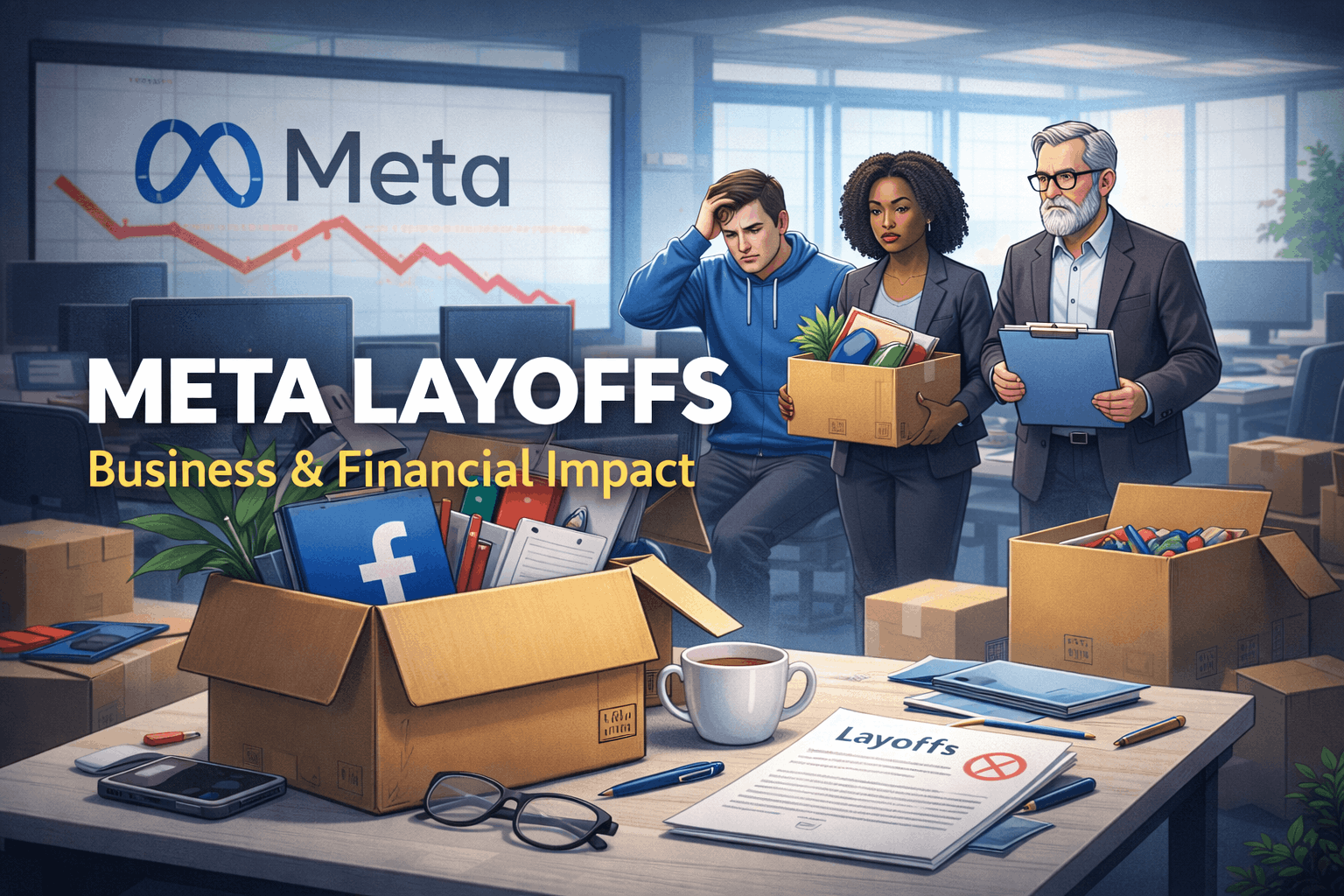
Layoffs at Meta Platforms have become a major talking point in the global tech sector. These workforce reductions are not random decisions; instead, they reflect deeper shifts in business strategy, economic pressure, and evolving technology priorities.
As the tech industry matures, companies are focusing more on efficiency, profitability, and long-term innovation rather than aggressive expansion.
Table of Contents
What Are Meta Layoffs?
Meta layoffs refer to job cuts implemented by Meta Platforms to reduce operational costs and realign business priorities.
These layoffs typically affect:
- Engineering and tech teams
- HR and operations departments
- Marketing and support roles
Such restructuring helps companies remain competitive in a rapidly changing market.
Key Reasons Behind Meta Layoffs
Several strong factors drive these layoffs.
Economic Slowdown
First, global economic uncertainty has reduced digital advertising spending. Since Meta relies heavily on ads, revenue growth has slowed.
Cost Efficiency Focus
Second, companies now prioritize profitability. So, they cut excess costs and optimize workforce size.
Strategic Shift to AI and Innovation
Meta is investing heavily in Artificial Intelligence and immersive technologies like the Metaverse. As a result, resources are shifted toward future-focused projects.
Overhiring Correction
During high-growth periods, Meta hired aggressively. However, slower growth forced the company to rebalance its workforce.
Impact on Employees
Layoffs directly affect employees in multiple ways.
Financial Uncertainty
Employees lose steady income, which creates short-term financial stress.
Career Transition
However, many professionals quickly move to startups or other tech firms.
Skill Development
As a result, workers often upgrade their skills, especially in AI, data, and cloud technologies.
Business and Financial Impact
Meta layoffs also have significant financial implications.
Reduced Operating Costs
Fewer employees lower salary expenses and improve efficiency.
Improved Profit Margins
Therefore, the company can increase profitability over time.
Stronger Investor Confidence
Investors often view cost-cutting as a positive step toward sustainable growth.
Impact on the Tech Industry
Meta’s decisions influence the entire tech ecosystem.
Industry-Wide Layoffs
Other tech giants often follow similar cost-cutting strategies.
Hiring Slowdown
As a result, job opportunities temporarily decrease in the tech sector.
Shift Toward High-Skill Roles
However, demand for AI and advanced tech skills continues to grow.
Stock Market Reaction to Meta Layoffs
Layoff announcements can directly affect stock performance.
- Positive reaction when cost-cutting improves outlook
- Negative reaction if layoffs signal deeper business problems
Therefore, investors closely monitor such announcements.
Strategic Shift in Meta’s Business Model
Meta is transforming its long-term strategy.
Focus on AI
The company is investing in artificial intelligence to improve products and ad targeting.
Metaverse Development
Although still evolving, Meta continues to invest in virtual reality ecosystems.
Operational Efficiency
At the same time, the company is streamlining processes to maximize productivity.
Risks and Challenges
Despite benefits, layoffs come with challenges.
- Loss of experienced talent
- Lower employee morale
- Negative public perception
However, companies must balance these risks with long-term goals.
Future Outlook of Meta
The future of Meta Platforms depends on execution and innovation.
Growth Opportunities
AI, digital ads, and virtual platforms offer strong growth potential.
Strategic Hiring
Instead of mass hiring, Meta may focus on specialized talent.
Long-Term Stability
If strategies succeed, the company can achieve sustainable growth.
Key Takeaways
- Meta layoffs reflect economic and strategic changes
- Cost-cutting improves financial efficiency
- AI and innovation are key future drivers
- The tech industry often follows similar trends
- Long-term growth depends on smart execution
Meta layoffs highlight a major shift in how tech companies operate. Instead of rapid expansion, the focus has moved toward efficiency, innovation, and profitability. While layoffs create short-term challenges, they often position companies for stronger long-term growth.
