
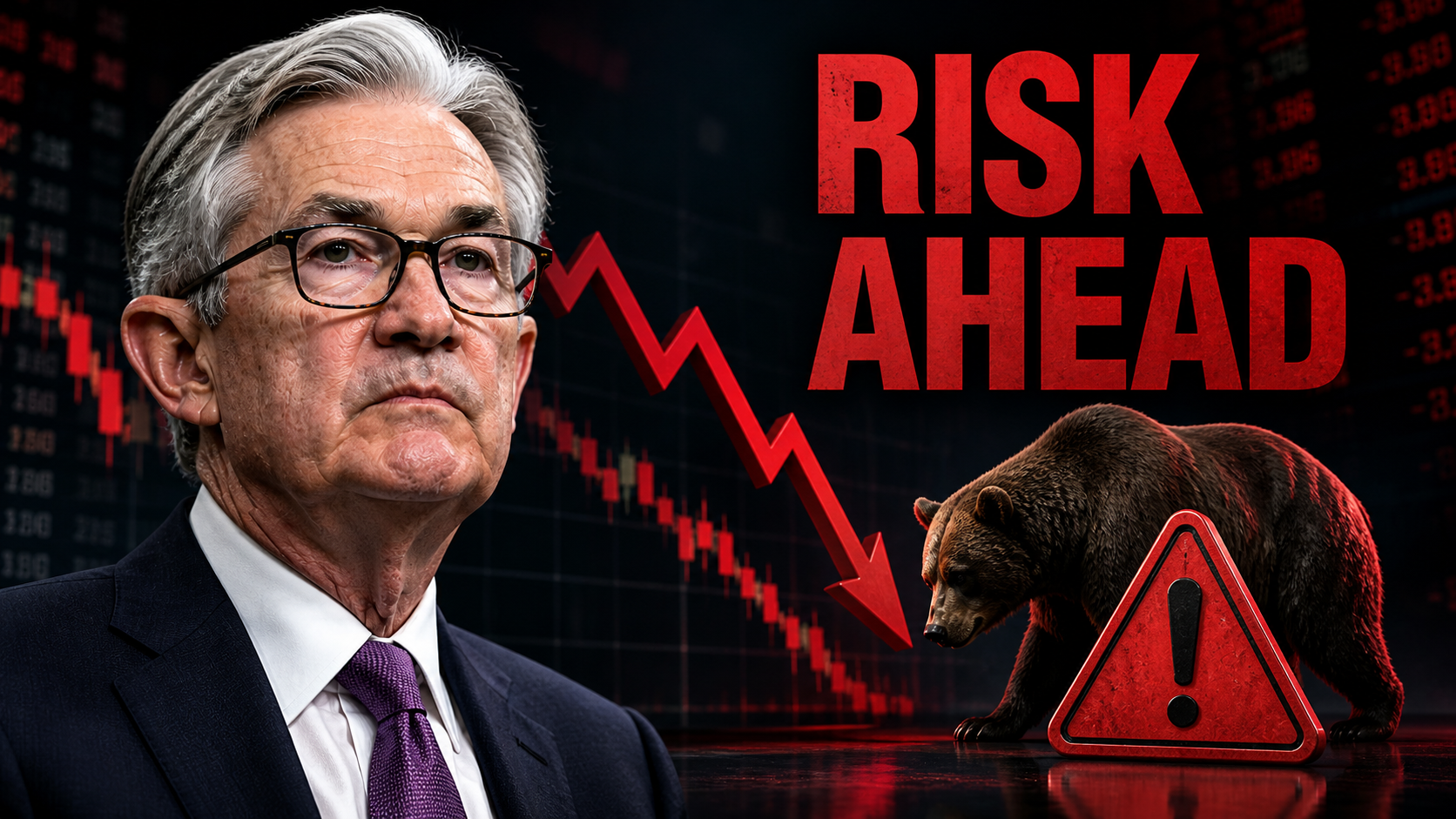
Jerome Powell, chairman of the Federal Reserve, is one of the most influential figures in global finance. Even a slight change in his tone or policy outlook can trigger significant movements in global stock markets.
His warnings are closely analyzed by investors, economists, and policymakers because they often signal upcoming monetary policy changes. These signals help markets anticipate interest rate decisions, liquidity changes, and broader economic trends.
Table of Contents
What Is Jerome Powell’s Stock Market Warning?
A stock market warning from Jerome Powell typically indicates concerns about excessive risk-taking, inflation pressures, or economic instability.
Such warnings are not random—they are carefully communicated messages designed to guide market expectations. When Powell highlights risks, it often prepares markets for tighter financial conditions or policy adjustments.
These warnings are usually delivered during:
- Federal Reserve policy meetings
- Press conferences
- Economic outlook speeches
They act as forward guidance, helping markets adjust gradually instead of reacting suddenly.
Key Reasons Behind the Warning
Several macroeconomic factors drive Powell’s cautious stance.
Persistent Inflation Pressure
Inflation above target levels forces the Federal Reserve to take corrective action. High inflation erodes purchasing power and creates long-term economic imbalances.
Interest Rate Policy Tightening
Rising interest rates are used to control inflation but also reduce market liquidity, making borrowing more expensive for businesses and consumers.
Asset Price Inflation
Rapid increases in stock prices can indicate overvaluation. Powell’s warning often aims to prevent speculative bubbles.
Global Economic Risks
Factors such as geopolitical tensions, energy price shocks, and global recession fears also contribute to cautious monetary policy.
Additionally, labor market conditions and wage growth trends play a key role in shaping the Fed’s outlook.
Impact on Stock Market Performance
Powell’s warnings often trigger immediate and noticeable changes in stock market behavior.
- Increased volatility across major indices
- Decline in high-growth and tech stocks
- Shift toward value and defensive stocks
Markets react not only to the warning itself but also to what it implies about future interest rate decisions. Even subtle wording changes can influence billions of dollars in market capitalization.
Over time, repeated warnings can lead to prolonged market corrections or sideways movements.
Sector-Wise Market Impact
Different sectors respond differently to Powell’s warning.
Technology Sector
Highly sensitive to interest rate changes due to reliance on future earnings projections.
Banking and Financial Sector
May benefit from higher interest rates through improved lending margins.
Consumer Goods Sector
Can face pressure due to reduced consumer spending during inflation.
Energy and Commodities
Often influenced by inflation trends and global economic conditions.
This sectoral divergence creates both risks and opportunities for investors.
Business and Corporate Impact
The warning has direct implications for corporate decision-making.
Rising Cost of Capital
Higher interest rates increase borrowing costs, affecting business expansion and investment.
Profit Margin Pressure
Inflation raises input costs, reducing profitability if companies cannot pass costs to consumers.
Strategic Planning Changes
Businesses may delay expansion, reduce hiring, or focus on cost efficiency during uncertain periods.
Large corporations often revise earnings forecasts based on expected policy changes from the Federal Reserve.
Investor Sentiment and Market Behavior
Investor psychology is deeply influenced by Powell’s statements.
- Short-term traders react quickly, increasing volatility
- Institutional investors rebalance portfolios
- Retail investors may shift toward safer assets
Fear and uncertainty often dominate in the short term, but experienced investors look for long-term opportunities during market dips.
Economic Implications
Powell’s warning reflects broader economic challenges and policy goals.
The Federal Reserve aims to achieve:
- Stable inflation levels
- Maximum employment
- Sustainable economic growth
To achieve these goals, the Fed may tighten or ease monetary policy depending on economic conditions. Powell’s warnings are part of this balancing act.
Long-Term Market Perspective
While short-term reactions can be negative, Powell’s warnings are generally aimed at ensuring long-term market stability.
Historically, markets have recovered after periods of tightening once inflation is controlled and economic conditions stabilize.
This makes it important for investors to differentiate between short-term volatility and long-term fundamentals.
Future Outlook for the Stock Market
The future direction of the stock market will depend on how effectively inflation is managed.
Scenario 1: Inflation Controlled
Markets stabilize, and investor confidence returns.
Scenario 2: Continued Inflation Pressure
Further rate hikes may lead to prolonged market weakness.
Scenario 3: Economic Slowdown
A potential recession could impact corporate earnings and valuations.
Monitoring Federal Reserve signals and economic data will remain crucial.
Strategic Insights for Investors
- Pay close attention to Federal Reserve announcements
- Diversify portfolios across sectors
- Focus on fundamentally strong companies
- Avoid panic selling during volatility
- Consider long-term investment horizons
Understanding Powell’s signals can provide a competitive advantage in market decision-making.
Jerome Powell’s stock market warnings are powerful indicators of future economic and financial trends. While they may cause short-term uncertainty, their ultimate goal is to maintain long-term economic stability.
For investors, businesses, and policymakers, interpreting these warnings correctly is essential for navigating complex market environments. By staying informed and adopting disciplined strategies, market participants can turn uncertainty into opportunity.
