
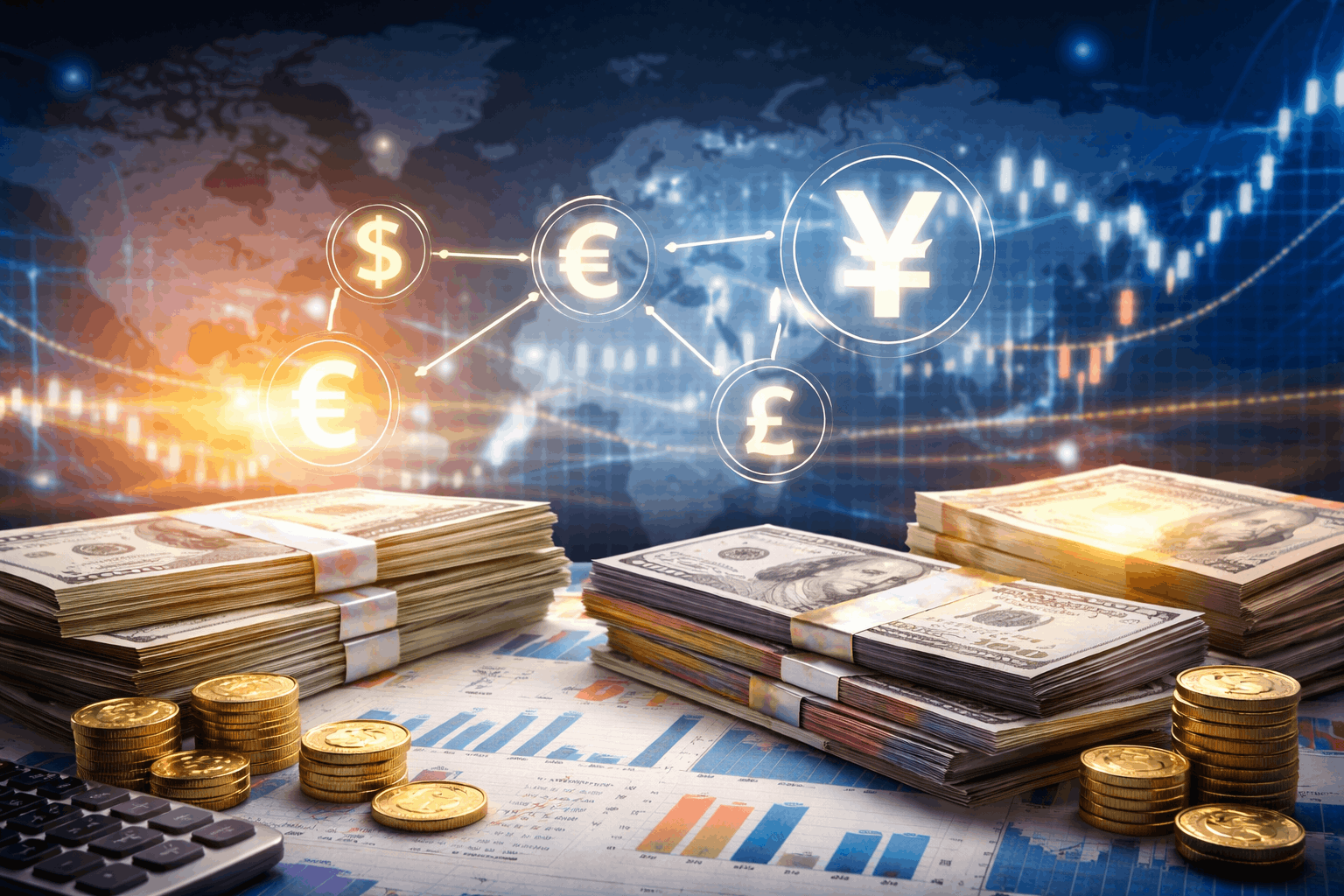
Currency exchange is the process of converting one country’s currency into another. It plays a crucial role in international trade, investments, tourism, and global economic stability. In a world where businesses operate across borders, understanding currency exchange is essential for making informed financial decisions.
Currency values are not fixed—they fluctuate every second based on global demand, economic indicators, and geopolitical conditions. This makes currency exchange one of the most dynamic elements in finance.
Table of Contents
- What Is Currency Exchange?
- Types of Exchange Rates
- Factors Affecting Currency Exchange Rates
- Role in Global Business
- Impact on Financial Markets
- Currency Exchange and Forex Market
- How Businesses Manage Currency Risk
- Advantages of Currency Exchange
- Challenges and Risks
- Role of Technology in Currency Exchange
- Future Outlook of Currency Exchange
What Is Currency Exchange?
Currency exchange refers to the conversion of one currency into another at a specific rate known as the exchange rate.
Example:
- USD to INR
- EUR to USD
- GBP to JPY
Exchange rates determine how much one currency is worth compared to another. These rates change frequently due to market conditions.
Types of Exchange Rates
There are different exchange rate systems used globally:
1. Fixed Exchange Rate
In this system, governments fix their currency value against another currency (like USD).
2. Floating Exchange Rate
Market demand and supply determine currency value. Most major economies follow this system.
3. Managed Float
A hybrid system where governments occasionally intervene to stabilize the currency.
Factors Affecting Currency Exchange Rates
Currency values are influenced by multiple economic and political factors:
1. Inflation Rates
Countries with lower inflation generally have stronger currencies.
2. Interest Rates
Higher interest rates attract foreign capital, increasing currency demand.
3. Economic Growth
Strong GDP growth boosts investor confidence and strengthens currency.
4. Political Stability
Stable governments attract investments and support currency value.
5. Trade Balance
Countries exporting more than importing usually have stronger currencies.
6. Government Debt
High national debt may weaken a currency over time.
Role in Global Business
Currency exchange is essential for businesses operating internationally:
- Enables smooth import and export transactions
- Impacts pricing and profit margins
- Affects global expansion strategies
- Determines competitiveness in international markets
For example, if a country’s currency weakens, its exports become cheaper and more attractive globally.
Impact on Financial Markets
Currency exchange directly affects financial markets:
- Stock markets react to currency fluctuations
- Foreign investments depend on exchange rates
- Commodity prices (oil, gold) are influenced by currency value
- Bond markets are affected by interest rate changes
Traders and investors monitor currency movements closely to make profitable decisions.
Currency Exchange and Forex Market
The Forex (Foreign Exchange) market is where currencies are traded globally.
Key Features:
- Open 24 hours a day
- Largest financial market in the world
- High liquidity and fast transactions
- Used by banks, corporations, and investors
Daily trading volume in Forex exceeds trillions of dollars, making it a critical part of the global economy.
How Businesses Manage Currency Risk
Exchange rate fluctuations can lead to losses. Businesses use various strategies to manage risk:
- Hedging using derivatives like futures and options
- Forward contracts to lock exchange rates
- Diversifying operations across multiple countries
- Maintaining multi-currency accounts
These techniques help companies reduce uncertainty and protect profits.
Advantages of Currency Exchange
- Facilitates international trade and commerce
- Encourages global investment flows
- Supports tourism and travel
- Helps countries participate in global markets
Currency exchange acts as a bridge connecting economies worldwide.
Challenges and Risks
Despite its benefits, currency exchange comes with risks:
- High volatility in exchange rates
- Unexpected economic changes
- Political instability
- Losses in international transactions
Proper planning and financial strategies are necessary to manage these risks.
Role of Technology in Currency Exchange
Technology is transforming how currency exchange works:
- Online currency exchange platforms
- Mobile banking and digital wallets
- AI-driven trading algorithms
- Blockchain-based transactions
These innovations make currency exchange faster, more transparent, and accessible.
Future Outlook of Currency Exchange
The future of currency exchange is evolving rapidly:
- Rise of digital currencies (CBDCs)
- Growth of fintech companies
- Faster cross-border payment systems
- Increased automation in trading
Global financial systems are becoming more integrated, making currency exchange even more important.
Currency exchange is a fundamental pillar of the global economy. It enables trade, drives investments, and influences financial markets worldwide. Whether you are a business owner, investor, or student, understanding currency exchange can help you make better financial decisions.
As technology and globalization continue to grow, currency exchange will remain a key driver of economic development and international business success.
