
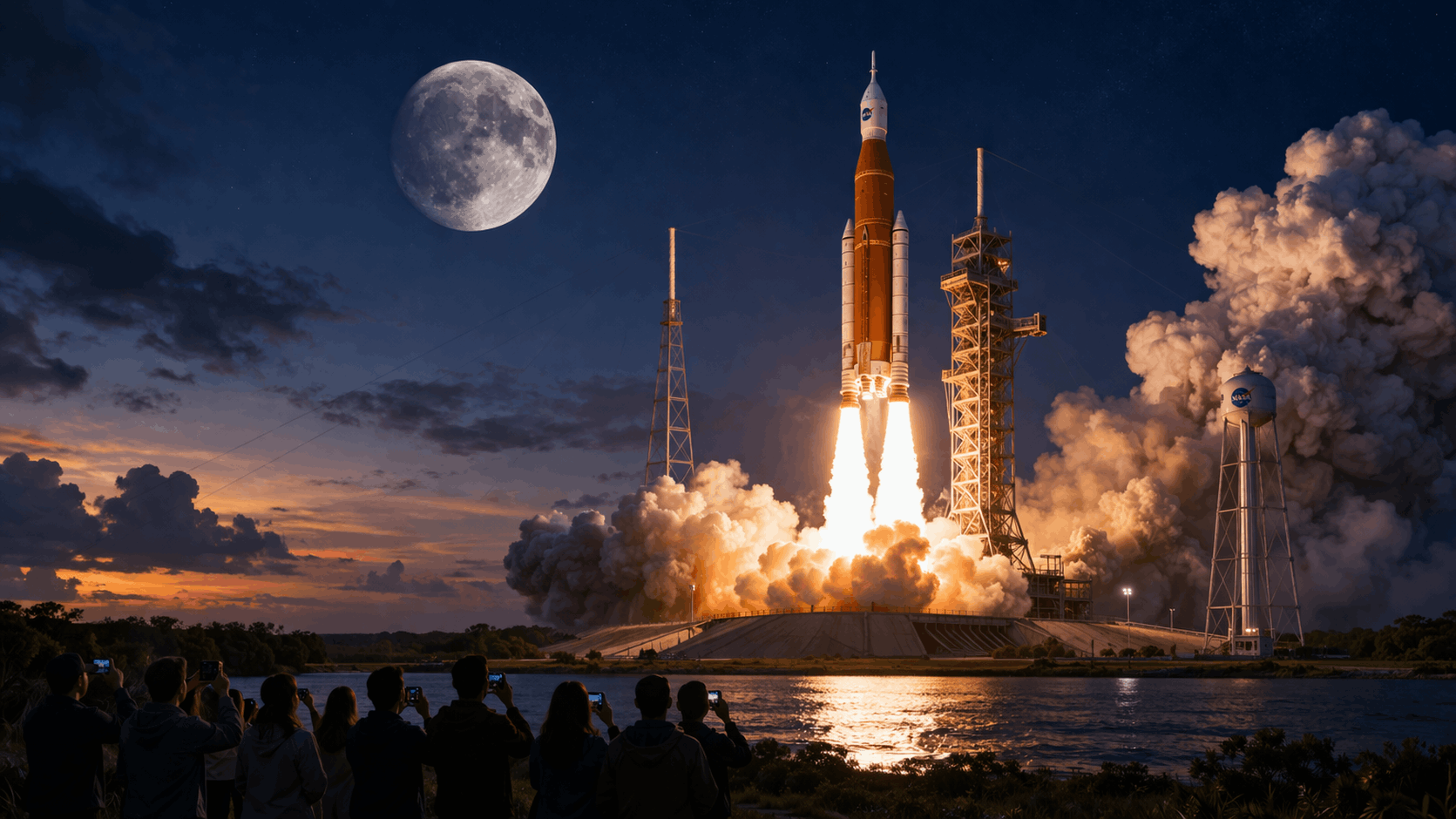
NASA is preparing for its next major milestone—Artemis 2, the first crewed mission of the Artemis program. This mission is a critical step toward returning humans to the Moon and expanding the global space economy.
The Artemis 2 launch is not just a scientific mission—it has significant implications for business, technology, and financial markets.
Table of Contents
- What Is the Artemis 2 Launch?
- Artemis 2 Launch Date and Timeline
- Mission Objectives and Technology
- Economic Impact of Artemis 2 Mission
- Role in the Global Space Economy
- Business and Investment Opportunities
- Competitive Landscape in Space Industry
- Risks and Challenges
- Future Outlook of Artemis Program
What Is the Artemis 2 Launch?
NASA Artemis 2 is a crewed lunar flyby mission that will send astronauts around the Moon and back to Earth.
Key Highlights:
- First human mission under Artemis program
- Uses the Orion spacecraft
- Launched by the Space Launch System (SLS)
- Prepares for future Moon landing missions
Artemis 2 Launch Date and Timeline
The Artemis 2 mission is currently targeted for 2025 (expected timeline), though schedules may shift due to testing and safety requirements.
Timeline Overview:
- Artemis 1 (Completed): Uncrewed mission
- Artemis 2: Crewed lunar flyby
- Artemis 3: Planned Moon landing
This timeline reflects long-term planning for sustainable lunar exploration.
Mission Objectives and Technology
NASA aims to achieve several goals through Artemis 2:
Core Objectives:
- Test life-support systems for astronauts
- Validate spacecraft safety and performance
- Demonstrate deep space human travel
- Build foundation for lunar base development
Technology Used:
- Orion Crew Capsule
- Space Launch System (SLS)
- Advanced navigation and communication systems
Economic Impact of Artemis 2 Mission
The Artemis 2 launch has strong financial implications:
1. Job Creation
Thousands of jobs in aerospace, engineering, and manufacturing.
2. Industry Growth
Boosts the global space and technology sectors.
3. Government Investment
Billions of dollars injected into innovation and infrastructure.
Role in the Global Space Economy
NASA is driving the expansion of the space economy through Artemis missions.
- Encourages private sector partnerships
- Expands satellite and communication industries
- Opens new markets like space tourism
- Promotes international collaboration
The space economy is projected to grow rapidly in the coming decades.
Business and Investment Opportunities
Artemis 2 creates opportunities for businesses and investors:
- Aerospace manufacturing
- Space infrastructure development
- AI and robotics technologies
- Energy and resource exploration
Companies working with NASA benefit from long-term contracts and innovation growth.
Competitive Landscape in Space Industry
Major companies involved include:
- SpaceX
- Blue Origin
- Boeing
Competition drives innovation and reduces costs in space exploration.
Risks and Challenges
Despite its potential, Artemis 2 faces several risks:
- Delays in launch schedule
- High mission costs
- Technical and safety challenges
- Dependence on government funding
Managing these risks is essential for mission success.
Future Outlook of Artemis Program
The future of Artemis missions looks promising:
- Establishment of a long-term lunar presence
- Preparation for Mars missions
- Growth of commercial space industry
- Expansion of global space economy
NASA aims to make space exploration sustainable and economically viable.
The Artemis 2 launch date marks a major step in human space exploration and global business transformation. Led by NASA, this mission will not only advance science but also unlock new opportunities in finance, technology, and investment.
As space becomes the next frontier for business, Artemis 2 plays a key role in shaping the future economy.
