
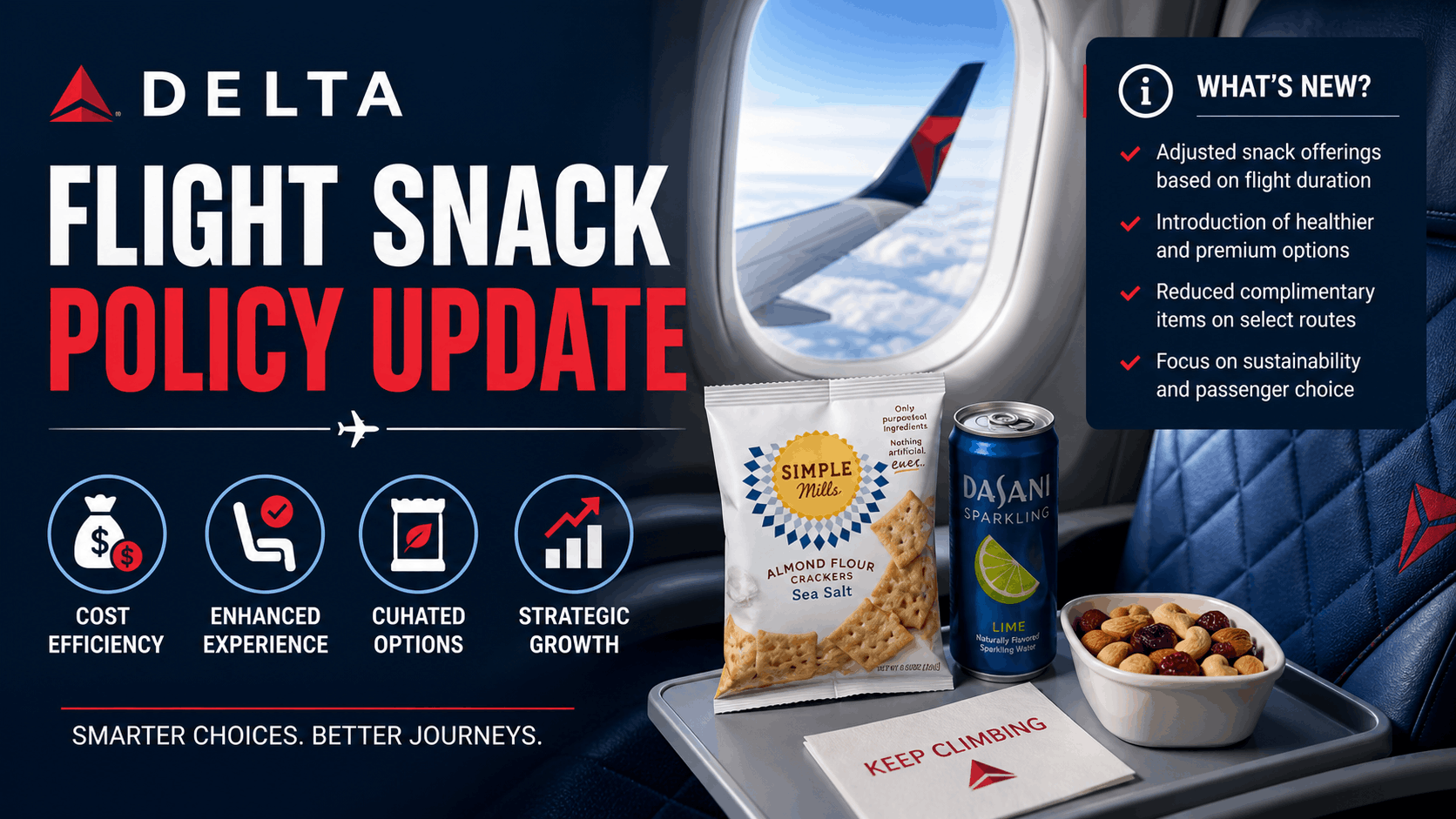
Delta Air Lines has recently updated its in-flight snack policy, reflecting broader changes in the airline industry. While snacks may seem like a small aspect of air travel, they play a significant role in cost management, customer experience, and brand positioning.
From a business and finance perspective, such policy updates are often driven by rising operational costs, supply chain challenges, and shifting passenger expectations.
Table of Contents
What Is the Delta Flight Snack Policy Update?
The updated snack policy by Delta Air Lines involves changes in the type, quantity, and availability of complimentary snacks offered on flights.
These updates may include:
- Adjusted snack offerings based on flight duration
- Introduction of healthier or premium options
- Reduction in complimentary items on shorter routes
The goal is to balance cost efficiency with customer satisfaction.
Key Reasons Behind the Policy Update
Several business and financial factors have influenced this decision.
Rising Operational Costs
Airlines are facing higher fuel prices, labor costs, and supply chain expenses, making cost optimization essential.
Inflation and Supply Chain Challenges
Food and beverage costs have increased globally, affecting in-flight service budgets.
Focus on Profit Margins
Reducing non-essential expenses like complimentary snacks helps improve profitability.
Changing Customer Preferences
Passengers are increasingly looking for healthier and customizable food options.
Financial Impact on Airline Operations
Snack policy updates directly affect airline finances.
- Lower operational costs through reduced food waste
- Improved efficiency in inventory management
- Better control over in-flight service expenses
Even small cost reductions per passenger can lead to significant savings when scaled across thousands of daily flights.
Business Strategy and Cost Optimization
Delta Air Lines is aligning its snack policy with a broader cost optimization strategy.
Streamlined Services
Airlines are focusing on essential services while minimizing unnecessary expenses.
Premium Upselling Opportunities
Offering paid premium snacks or meals creates additional revenue streams.
Data-Driven Decisions
Airlines use passenger data to determine which products are most popular and profitable.
This strategic approach helps airlines maintain profitability in a highly competitive market.
Impact on Customer Experience
Changes in snack policies can influence passenger satisfaction.
Positive Impact
- Availability of healthier and premium options
- More personalized choices
Negative Impact
- Reduced complimentary offerings may disappoint some passengers
- Perceived decline in service quality
Balancing cost savings with customer expectations is crucial for maintaining brand loyalty.
Industry-Wide Trends in Airline Services
Delta’s policy update reflects a broader trend across the airline industry.
- Shift toward paid onboard services
- Focus on ancillary revenue streams
- Increased emphasis on efficiency and cost control
Other airlines are also adjusting their service models to remain competitive and financially sustainable.
Future Outlook of Delta’s Service Strategy
The future of in-flight services is likely to focus on flexibility and personalization.
Delta Air Lines may continue to:
- Expand premium offerings
- Introduce digital ordering systems
- Enhance passenger experience through technology
As competition increases, airlines will need to innovate while keeping costs under control.
Strategic Insights for Businesses and Investors
- Cost optimization is a key priority in the airline industry
- Small operational changes can significantly impact profitability
- Customer experience remains critical for brand loyalty
- Ancillary revenue streams are becoming more important
- Data-driven strategies are shaping business decisions
The Delta flight snack policy update highlights how even minor operational changes can have major business and financial implications. By balancing cost efficiency with customer satisfaction, Delta Air Lines is adapting to evolving market conditions and maintaining competitiveness.
For businesses and investors, this update serves as an example of how companies optimize resources while responding to economic pressures and consumer expectations.
