
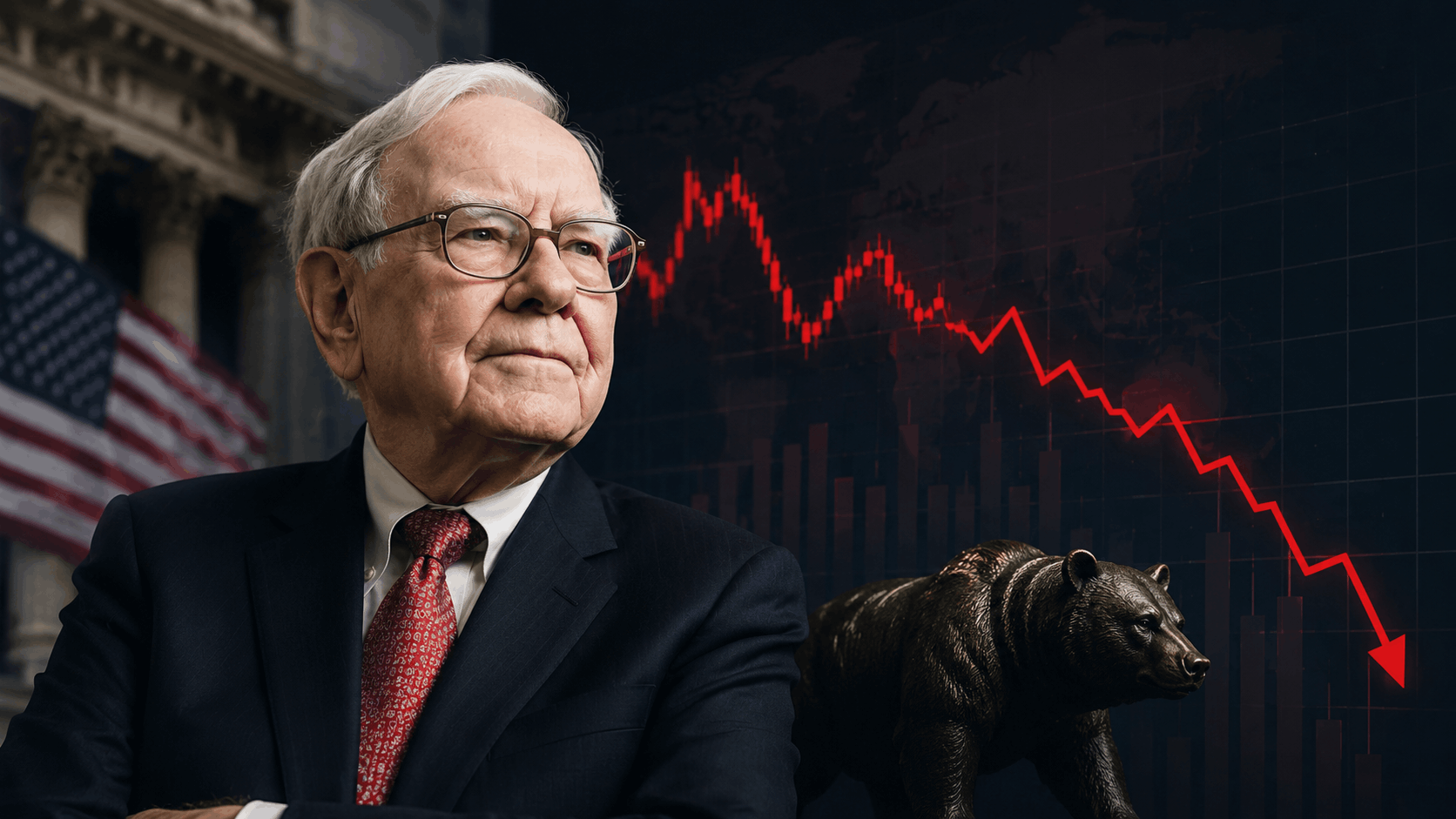
Warren Buffett, one of the most successful investors in history and CEO of Berkshire Hathaway, is widely respected for his long-term investment wisdom. Whenever Buffett speaks about the stock market, global investors pay attention.
In recent years, Buffett has issued several cautious signals about the stock market, warning investors about overvaluation, economic uncertainty, and the importance of disciplined investing. His insights are not about predicting crashes but about preparing for risk and volatility.
One of the key reasons his words matter is that Buffett has consistently built wealth through patience and value investing, making his perspective extremely important in today’s fast-moving financial markets.
This article explains Warren Buffett’s stock market warning, what it means for investors, and how you can apply his strategy in today’s financial environment.
Table of Contents
Who Is Warren Buffett and Why His Opinion Matters?
Warren Buffett is the chairman and CEO of Berkshire Hathaway, a multinational holding company known for its long-term value investing approach.
He is often called the “Oracle of Omaha” due to his accurate market insights and consistent investment performance over decades. Buffett’s strategies focus on:
- Long-term investing
- Value over speculation
- Strong fundamentals
- Emotional discipline in markets
Because of his track record, even a subtle warning from Buffett can move global investor sentiment.
Warren Buffett Stock Market Warning: Key Concerns
1. Overvalued Stock Markets
Buffett has often warned that when markets rise too fast, valuations become disconnected from real economic growth.
High valuations mean:
- Increased risk of correction
- Lower future returns
- Increased speculation
2. Economic Uncertainty and Interest Rates
Rising interest rates and global inflation concerns are major factors influencing Buffett’s cautious tone.
Higher rates:
- Reduce corporate profits
- Increase borrowing costs
- Impact stock market liquidity
3. Investor Behavior and Speculation
Buffett strongly warns against emotional and speculative investing, especially during market hype cycles.
He believes many investors:
- Chase short-term gains
- Ignore fundamentals
- React emotionally to market trends
4. Cash Position Strategy
One of Buffett’s strongest signals is holding large cash reserves inside Berkshire Hathaway. This indicates caution and readiness to invest when valuations become attractive.
Cash reserves suggest:
- Waiting for market correction opportunities
- Avoiding overpriced assets
- Maintaining financial flexibility
Buffett Indicator: A Key Market Valuation Signal
One of the most discussed metrics linked to Warren Buffett is the Buffett Indicator, which compares the total stock market value to a country’s GDP. When this ratio becomes extremely high, it often signals that the market may be overvalued.
Buffett has previously referred to this as “probably the best single measure of where valuations stand at any given moment.” A high Buffett Indicator does not guarantee a crash, but it strongly suggests that future returns may be lower than average.
Historical Lessons from Warren Buffett’s Market Warnings
Over the decades, Buffett has consistently emphasized caution during periods of excessive market optimism. During the dot-com bubble in the early 2000s, he warned investors about irrational valuations in technology stocks. Similarly, before the 2008 financial crisis, he highlighted risks related to excessive leverage in the financial system.
These historical examples show that Buffett’s warnings are not predictions of exact timing, but signals of systemic risk building in the market.
Common Investor Mistakes During Bull Markets
Buffett often highlights that the biggest risk for investors is not the market itself, but their own behavior. During bullish phases, many investors make emotional decisions such as:
- Buying stocks at extremely high valuations
- Following hype-driven trends without research
- Ignoring long-term fundamentals
- Panic selling during minor corrections
These mistakes often lead to poor long-term returns, even in strong markets.
How to Apply Buffett’s Strategy in Today’s Market
In today’s volatile global environment, Buffett’s principles remain highly relevant. Investors can apply his approach by focusing on high-quality companies with strong balance sheets, consistent earnings, and durable competitive advantages.
Instead of trying to time the market, Buffett encourages investors to stay invested in businesses they understand and believe in for the long term. This disciplined approach helps reduce emotional decision-making and improves wealth-building potential over time.
He also advises investors to keep learning and avoid blindly following market trends, as true investing success comes from knowledge and patience rather than speculation.
Buffett’s Core Investment Philosophy in Simple Terms
At the heart of Buffett’s strategy is a simple idea: buy good businesses at fair prices and hold them for a long time. He believes wealth is created not through frequent trading, but through long-term ownership of strong companies.
This philosophy has helped him become one of the richest investors in the world and remains highly relevant even in today’s technology-driven markets.
Buffett’s Warning Is About Discipline, Not Fear
Warren Buffett’s stock market warning is not meant to create panic. Instead, it is a reminder of disciplined investing, patience, and risk awareness.
In a world driven by fast trading and speculation, Buffett’s philosophy remains simple: “Be fearful when others are greedy, and greedy when others are fearful.”
For investors in 2026, the message is clear—stay focused on fundamentals, avoid emotional decisions, and think long term.
