
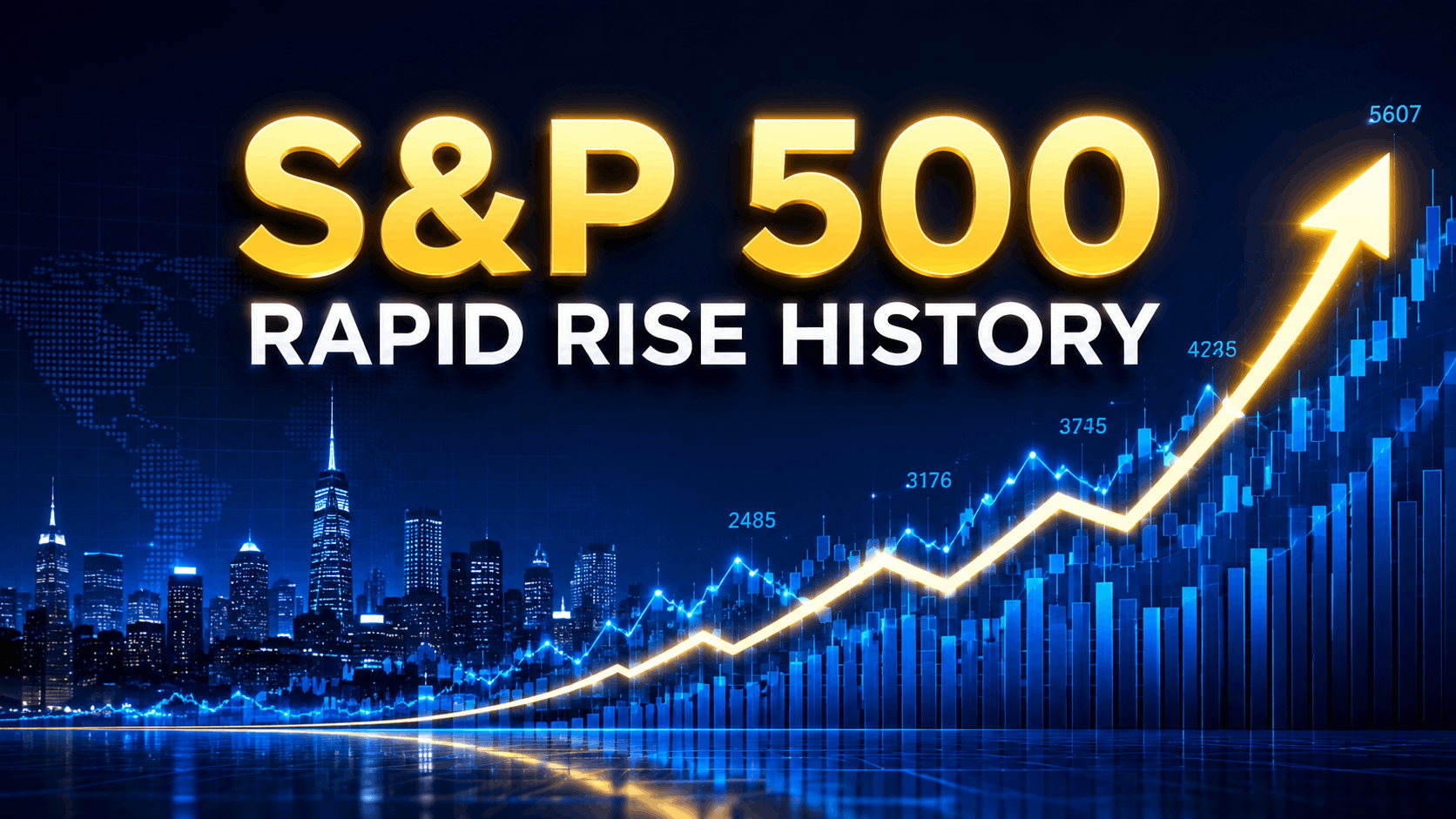
The history of rapid rises in the S&P 500 is trending as investors analyze previous market rallies to understand current stock market momentum.
The S&P 500 is widely regarded as one of the most important indicators of the U.S. economy and financial markets. Throughout history, the index has experienced several powerful rallies driven by economic recovery, technological innovation, corporate earnings growth, and investor confidence.
Today, analysts, investors, and financial professionals are examining past market surges to identify patterns that may influence future investment decisions.
As a result, understanding the rapid rise history of the S&P 500 has become increasingly important in business and finance discussions.
Table of Contents
What Is the S&P 500 and Why Does It Matter?
The S&P 500 is a stock market index that tracks the performance of 500 leading publicly traded companies in the United States.
The index represents multiple sectors including:
- Technology
- Healthcare
- Financial services
- Consumer goods
- Industrial manufacturing
Furthermore, many investors use the S&P 500 as a benchmark for measuring overall market performance.
Because of its broad representation of the economy, movements in the index often influence investor sentiment worldwide.
Understanding Rapid Rises in S&P 500 History
A rapid rise occurs when the market experiences strong gains within a relatively short period.
Historically, major S&P 500 rallies have often followed:
- Economic recoveries
- Interest rate changes
- Corporate earnings growth
- Technological breakthroughs
- Increased investor confidence
Additionally, market recoveries after economic downturns frequently create some of the strongest upward movements.
As economic conditions improve, investors often return to equities, supporting broader market growth.
Key Factors Behind Major S&P 500 Market Rallies
Several factors have consistently contributed to rapid increases in the S&P 500.
Important drivers include:
Economic Expansion
Strong economic growth often leads to higher corporate profits and increased investor optimism.
Innovation and Technology
Technological advancements have historically supported significant market gains, particularly within the technology sector.
Monetary Policy
Lower interest rates and supportive central bank policies can encourage investment and market participation.
Corporate Earnings Growth
When companies report strong earnings, investors often increase stock purchases, pushing markets higher.
Furthermore, a combination of these factors can create powerful market rallies over time.
How Investor Sentiment Influences Market Growth
Investor psychology plays a major role in stock market performance.
Positive sentiment can encourage:
- Increased investment activity
- Higher market participation
- Greater risk-taking behavior
- Stronger demand for equities
Additionally, optimism regarding economic growth often supports rising stock prices.
Because of this, investor confidence remains one of the most influential factors behind rapid market advances.
Why Investors Study Historical Market Rallies
Historical analysis helps investors better understand market behavior.
By studying previous S&P 500 rallies, investors can:
- Identify recurring trends
- Understand market cycles
- Improve long-term planning
- Evaluate risk and opportunity
Furthermore, historical market data provides valuable insights into how financial markets respond to changing economic conditions.
As a result, many professional investors use historical performance as part of their broader investment research process.
Risks Associated With Rapid Market Growth
Although rapid market advances can create opportunities, they also involve certain risks.
Potential concerns include:
- Market volatility
- Overvaluation risks
- Economic uncertainty
- Interest rate changes
- Unexpected geopolitical events
Additionally, strong rallies do not guarantee future performance.
Therefore, investors typically balance growth opportunities with risk management strategies.
How Technology Companies Have Influenced the S&P 500
Technology companies have become increasingly important contributors to S&P 500 performance.
Key growth drivers include:
- Artificial intelligence
- Cloud computing
- Semiconductor innovation
- Digital transformation
- Enterprise software solutions
Furthermore, technology sector growth has helped drive several of the index’s most significant rallies in recent decades.
As innovation continues accelerating, technology companies may remain major influences on future market performance.
Future Outlook for the S&P 500
The future performance of the S&P 500 will depend on several economic and financial factors.
Important influences include:
- Corporate earnings growth
- Interest rate trends
- Economic expansion
- Technological innovation
- Global market conditions
Additionally, continued investment in artificial intelligence and digital transformation may support future market opportunities.
As economic conditions evolve, investors will continue monitoring these factors closely.
Why S&P 500 Rapid Rise History Matters in Business and Finance
The history of rapid rises in the S&P 500 provides valuable insight into how financial markets respond to economic growth, innovation, and investor confidence.
While every market cycle is unique, historical trends can help investors better understand opportunities and risks within modern financial markets.
Therefore, studying the S&P 500’s rapid rise history remains an important tool for investors, businesses, and financial professionals seeking to navigate changing market conditions.
