
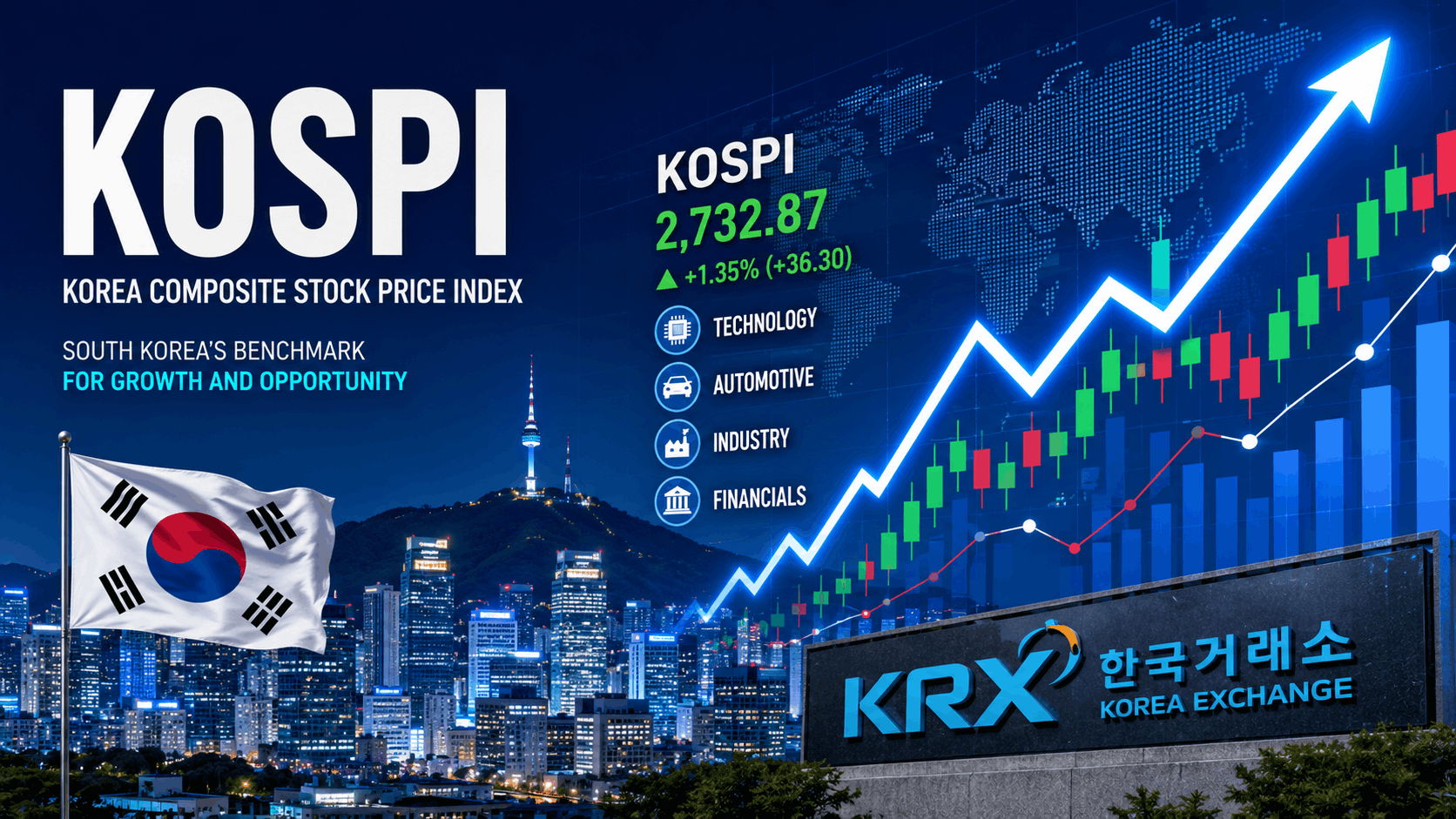
The KOSPI (Korea Composite Stock Price Index) is one of Asia’s most influential stock market indexes and has recently gained significant attention as investors monitor global economic trends, technology stocks, and international trade developments.
South Korea is home to many world-leading technology, automotive, and manufacturing companies, making the KOSPI an important indicator of both regional and global market sentiment.
Today, KOSPI is trending because it reflects:
- Global technology demand
- Semiconductor industry performance
- International trade conditions
- Asian market movements
- Foreign investment activity
As worldwide investors seek opportunities in Asia’s growing economies, the KOSPI remains a key benchmark for business and finance professionals.
Table of Contents
What Is the KOSPI and Why Is It Important?
The KOSPI, or Korea Composite Stock Price Index, measures the performance of major publicly traded companies listed on South Korea’s primary stock exchange.
The index includes businesses from sectors such as:
- Technology
- Electronics
- Automotive
- Chemicals
- Financial services
Furthermore, the KOSPI serves as a barometer for South Korea’s economic health and investor confidence.
Because South Korea plays a major role in global manufacturing and semiconductor production, movements in the KOSPI often attract worldwide attention.
How the KOSPI Reflects the Global Economy
The KOSPI is closely connected to international trade and global business activity.
Several factors influence its performance:
- Export demand
- Technology sector growth
- Currency fluctuations
- Global supply chains
- International economic conditions
Additionally, South Korea’s export-driven economy means that changes in global demand can quickly impact corporate earnings and market performance.
As a result, investors frequently monitor the KOSPI for signals about broader economic trends.
Why Investors Are Watching the KOSPI
Investors follow the KOSPI because it offers exposure to some of the world’s leading technology and manufacturing companies.
Key reasons for investor interest include:
- Growth in semiconductor markets
- Expansion of artificial intelligence technologies
- Strong export industries
- Diversification opportunities
- Asian market growth potential
Furthermore, institutional investors often use the KOSPI to evaluate market conditions across the Asia-Pacific region.
Because of its international significance, the index remains an important part of many global investment strategies.
Technology and Semiconductor Companies Drive KOSPI Growth
South Korea is a global leader in semiconductor manufacturing and advanced technology.
Industries supporting KOSPI growth include:
- Artificial intelligence
- Semiconductor production
- Consumer electronics
- Electric vehicle components
- Digital infrastructure
Additionally, rising global demand for AI chips and advanced computing technologies has increased investor interest in South Korean markets.
As innovation continues expanding, technology companies are expected to remain major contributors to KOSPI performance.
Factors That Influence KOSPI Market Performance
Several economic and financial factors can affect the KOSPI.
Important influences include:
- Interest rate decisions
- Global inflation trends
- International trade policies
- Currency exchange rates
- Corporate earnings reports
Furthermore, geopolitical developments and changes in global supply chains may also impact investor sentiment.
Therefore, market participants carefully monitor both domestic and international events.
Challenges Facing the South Korean Stock Market
Although the KOSPI offers strong growth opportunities, it also faces several challenges.
Major concerns include:
- Global economic uncertainty
- Export market fluctuations
- Supply chain disruptions
- Rising competition in technology sectors
- Currency volatility
Additionally, dependence on global trade can make the market sensitive to international economic slowdowns.
Because of these factors, investors often balance growth opportunities with careful risk management.
Future Outlook for the KOSPI
The long-term outlook for the KOSPI remains positive as technological innovation and global digital transformation continue accelerating.
Several factors may support future growth:
- Expansion of artificial intelligence industries
- Increased semiconductor demand
- Growth in electric vehicle technologies
- International investment inflows
- Continued industrial innovation
Furthermore, South Korea’s leadership in advanced manufacturing positions the KOSPI as an important index for future global economic development.
As technology continues evolving, the KOSPI is expected to remain a closely watched benchmark.
Why KOSPI Matters in Business and Finance
The KOSPI represents much more than a national stock market index. It reflects the strength of South Korea’s economy, the growth of global technology industries, and the direction of international investment flows.
For investors, businesses, and financial analysts, understanding the KOSPI provides valuable insight into broader economic and market trends.
Therefore, the KOSPI continues to be one of the most important indexes in global business and finance.
