
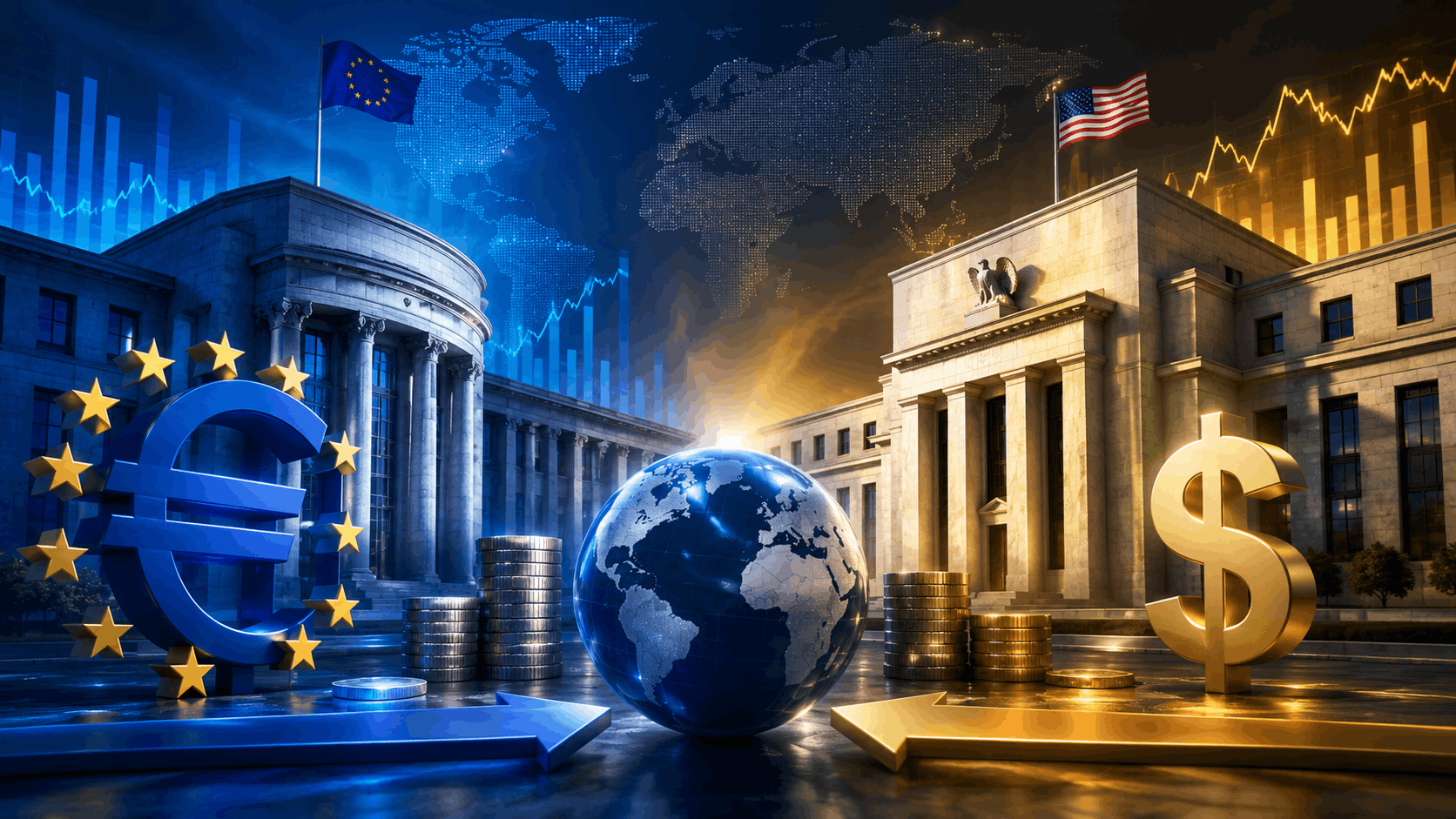
The ECB and Federal Reserve rate outlook is one of the most important topics for investors in 2026. Interest rate decisions by the European Central Bank (ECB) and the U.S. Federal Reserve (Fed) influence global borrowing costs, stock markets, bond yields, currencies, and overall economic growth.
As inflation gradually moderates while economic uncertainty remains, investors are closely watching central bank signals for clues about future monetary policy. Understanding these developments can help businesses and investors prepare for changing market conditions.
Table of Contents
What Are the ECB and Federal Reserve?
The Federal Reserve is the central bank of the United States, while the European Central Bank (ECB) manages monetary policy for the Eurozone.
Both institutions aim to:
- Maintain price stability
- Control inflation
- Support sustainable economic growth
- Promote financial stability
- Manage interest rate policy
Although they operate independently, their decisions often affect financial markets around the world.
Why Interest Rate Expectations Are Important in 2026
Interest rate expectations influence nearly every financial asset.
Key reasons investors monitor central bank decisions include:
Inflation Control
Central banks adjust interest rates to keep inflation within their target ranges.
Economic Growth
Lower interest rates can stimulate borrowing and spending, while higher rates help slow inflation.
Market Confidence
Policy guidance shapes investor expectations and market sentiment.
Global Capital Flows
Interest rate differences influence international investment and currency movements.
How Rate Decisions Affect Global Markets
Changes in ECB and Federal Reserve policy have widespread effects across financial markets.
Stock Markets
Lower interest rates often support equity valuations, while higher rates can increase market volatility.
Bond Markets
Government bond yields typically respond quickly to changing interest rate expectations.
Currency Markets
The U.S. dollar and euro often strengthen or weaken depending on central bank policy decisions.
Commodity Markets
Gold, silver, and oil prices frequently react to inflation expectations and interest rate outlooks.
Banking Sector
Banks benefit from changing lending margins depending on the direction of interest rates.
What Investors Should Expect Next
Several economic indicators will shape future monetary policy decisions.
Investors should monitor:
- Inflation reports
- Employment data
- GDP growth
- Consumer spending
- Manufacturing activity
- Central bank meetings
- Policy statements
- Global geopolitical developments
These factors will influence whether central banks maintain, reduce, or increase interest rates during the remainder of 2026.
Why the ECB and Fed Rate Outlook Matters in Business and Finance
Interest rate policy directly affects businesses, consumers, and investors worldwide.
Its impact includes:
- Corporate borrowing costs
- Mortgage rates
- Consumer loans
- Business investment
- Stock market performance
- Bond yields
- International trade
- Currency exchange rates
Companies also use central bank guidance when planning expansion, capital investments, and financing strategies.
The ECB and Federal Reserve rate outlook will remain a major driver of global financial markets throughout 2026. While inflation trends continue improving in many regions, policymakers are expected to balance economic growth with price stability before making further interest rate decisions.
For investors, monitoring inflation data, central bank meetings, and economic indicators can provide valuable insights into future market opportunities and risks. Maintaining a diversified investment strategy remains important as monetary policy continues to evolve.
References


