
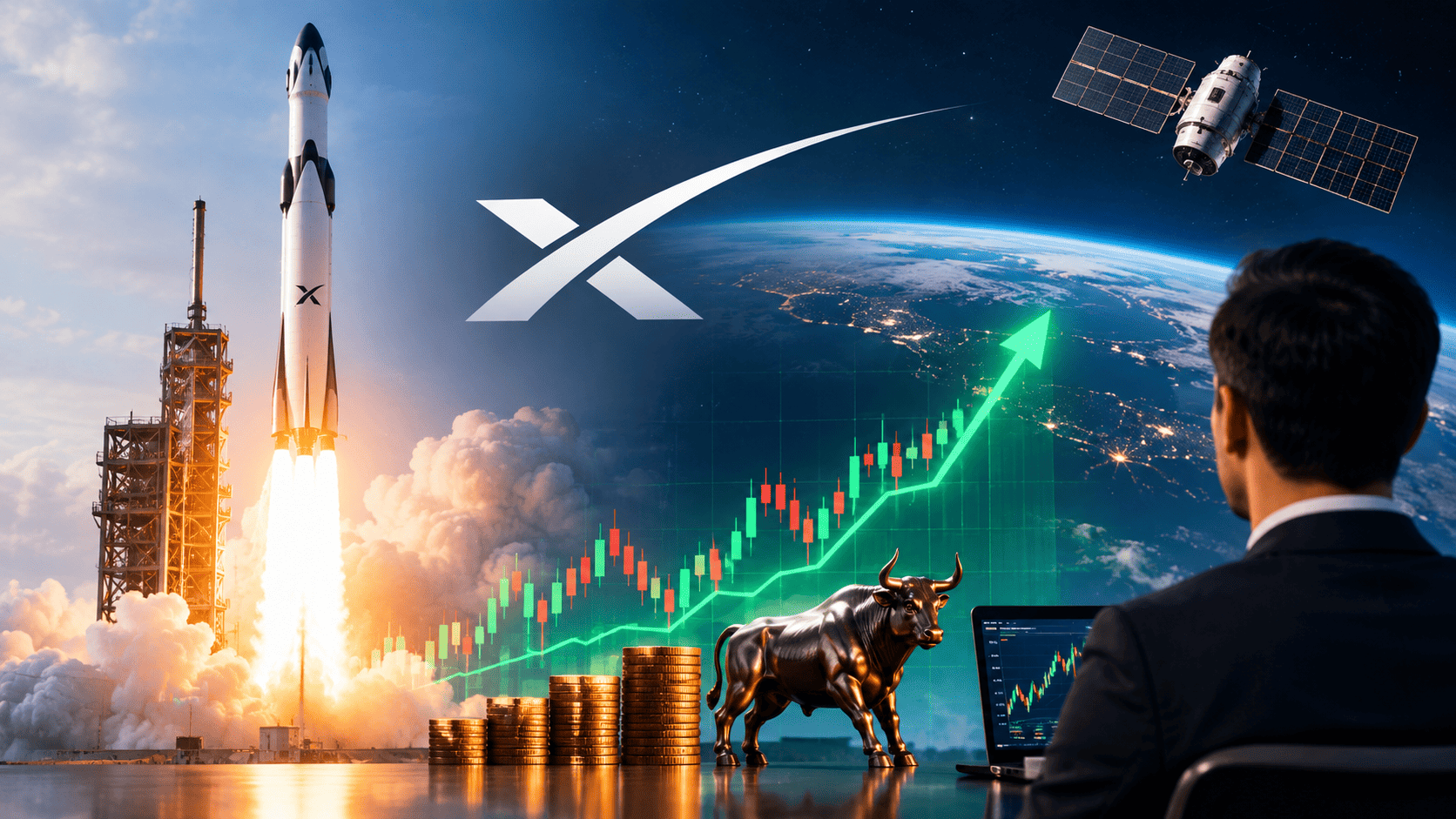
SpaceX has become one of the most closely watched names in the global technology, aerospace and investment markets. Founded by Elon Musk, the company has transformed the commercial space industry through reusable rockets, satellite internet services and ambitious plans for next-generation space infrastructure.
In 2026, investor interest in SpaceX stock has increased as the company expands its business across space launches, Starlink connectivity and artificial intelligence infrastructure. The reported public-market debut has also made SpaceX a major topic among investors looking for exposure to the future of space technology.
However, strong investor interest does not automatically mean that the stock is attractively valued. Investors must examine the company’s revenue growth, operating costs, future expansion plans and valuation before making investment decisions.
Table of Contents
- What Is Driving Interest in SpaceX Stock in 2026?
- SpaceX IPO 2026: What Investors Should Know
- SpaceX Stock Price: What Investors Should Watch
- Why SpaceX’s Rocket Business Matters for Investors
- Could AI Investment Become a New Growth Driver for SpaceX?
- SpaceX Valuation: Is the Stock Too Expensive?
- What Could Make SpaceX Stock More Bullish?
- What Risks Could Push SpaceX Stock Lower?
- SpaceX Stock vs Traditional Technology Stocks
- What Should Investors Watch Next?
- SpaceX Stock Forecast: What Could Happen in 2026?
- What Is the Future of SpaceX Stock?
What Is Driving Interest in SpaceX Stock in 2026?
Several factors are contributing to increased attention around SpaceX stock.
The first is the company’s position in the commercial space industry. SpaceX has established a strong presence in satellite launches and rocket services, while its reusable-launch technology has helped change the economics of space transportation.
The second factor is Starlink. The satellite internet business has the potential to generate recurring revenue from customers across different countries and regions.
The third factor is the company’s growing connection with artificial intelligence. Reports indicate that SpaceX is exploring AI-related infrastructure and large-scale computing opportunities, creating another potential growth avenue.
The combination of aerospace technology, satellite connectivity and AI investment has made SpaceX an important company for investors to monitor in 2026.
SpaceX IPO 2026: What Investors Should Know
SpaceX’s public-market debut has attracted considerable attention because of the company’s size, reputation and long-term growth ambitions.
Recent market reports state that SpaceX completed its initial public offering in June 2026 under the ticker symbol SPCX. Reports also described a multitrillion-dollar valuation, making the listing one of the most significant IPO events in the technology and aerospace sectors.
However, investors should verify the latest official exchange information, company filings and financial disclosures before relying on reported share prices or valuation figures.
An IPO can provide a company with substantial capital for expansion. In SpaceX’s case, additional funding could support rocket development, satellite deployment, infrastructure investment and new technology projects.
At the same time, a large valuation creates high expectations. The company may need to deliver strong revenue growth and improving profitability to justify its market value.
SpaceX Stock Price: What Investors Should Watch
SpaceX stock price movements may depend on several factors, including company earnings, launch activity, Starlink growth and investor expectations.
According to recent market data reported by Investing.com, SpaceX shares were trading near $151 in September 2026. However, stock prices change frequently, and investors should check a live market source for the latest price before making any decision.
The most important factors influencing SpaceX stock price include:
- Quarterly revenue and earnings
- Starlink subscriber growth
- Rocket-launch performance
- Development of reusable spacecraft
- AI infrastructure investments
- Government and commercial contracts
- Overall technology-stock sentiment
- Interest rates and market valuations
A strong business announcement may support the share price in the short term. Nevertheless, long-term performance will depend on whether the company can convert its technological advantages into sustainable profits.
How Starlink Could Support SpaceX Stock Growth
Starlink is one of SpaceX’s most important business opportunities.
The service uses a network of satellites in low Earth orbit to provide internet connectivity to customers in different parts of the world. Its potential customer base includes households, businesses, airlines, ships and organizations operating in areas with limited traditional broadband access.
Unlike some project-based aerospace businesses, satellite internet can generate recurring subscription revenue.
This recurring-revenue model could help SpaceX diversify its business beyond rocket launches.
Starlink’s future growth may depend on:
Expanding Global Coverage
More satellite deployments could help SpaceX improve service availability and reach new markets.
Increasing Customer Adoption
Growth in residential, business and enterprise customers could support recurring revenue.
Improving Network Capacity
Technological improvements could increase service quality and support higher demand.
Expanding Enterprise Services
Businesses, airlines and maritime operators could create additional commercial opportunities.
However, Starlink also faces competition, regulatory requirements, infrastructure costs and challenges related to satellite maintenance.
Why SpaceX’s Rocket Business Matters for Investors
SpaceX’s rocket business remains central to its long-term strategy.
The Falcon 9 program has demonstrated the commercial value of reusable launch technology. Reusing rocket components can reduce certain launch costs and improve operational efficiency.
The company is also developing Starship, a larger launch system designed to support ambitious missions and potentially increase payload capacity.
If Starship achieves its technical and commercial objectives, it could open opportunities in:
- Large-scale satellite deployment
- Commercial space transportation
- Lunar missions
- Deep-space exploration
- Government contracts
- Future space infrastructure
However, rocket development requires substantial investment. Delays, technical failures, regulatory approvals and launch restrictions could affect costs and investor confidence.
Therefore, investors should distinguish between a promising engineering project and a proven revenue-generating business.
Could AI Investment Become a New Growth Driver for SpaceX?
Artificial intelligence has become an important part of the global investment landscape.
SpaceX has reportedly been exploring AI-related infrastructure, including large-scale computing capacity and future space-based computing concepts. These projects could create new opportunities if the company successfully develops commercially viable services.
The potential benefits include:
New revenue streams: AI infrastructure could expand SpaceX’s business beyond aerospace and connectivity.
Higher technology integration: Space-based systems could eventually support communication, computing and data-related applications.
Growing enterprise demand: Businesses may require more computing capacity as AI adoption increases.
Long-term strategic value: Combining satellite technology with AI infrastructure could create a distinctive business model.
However, AI investment also introduces significant risks. Infrastructure development can require substantial capital, while competition in computing and data-center services remains intense.
Investors should therefore evaluate actual contracts, operating revenue and cash flow rather than relying only on ambitious future projections.
SpaceX Valuation: Is the Stock Too Expensive?
Valuation is one of the biggest issues surrounding SpaceX stock.
A company may have exceptional technology and strong growth prospects but still be an expensive investment if its share price already reflects extremely optimistic expectations.
SpaceX’s valuation may depend on the combined potential of its launch business, Starlink operations and future technology projects.
Investors should examine:
Revenue Growth
Is the company generating consistent growth across its major business segments?
Profitability
Can SpaceX improve operating margins while continuing to invest in expansion?
Cash Flow
Does the business generate enough cash to support future projects?
Capital Expenditure
How much money is required for rockets, satellites, AI infrastructure and other developments?
Valuation Multiples
Does the stock price appear reasonable compared with revenue, earnings and long-term growth prospects?
A high valuation can create downside risk if the company fails to meet market expectations.
What Could Make SpaceX Stock More Bullish?
Several developments could support a positive outlook for SpaceX stock.
Strong Starlink Growth
Increasing subscribers and recurring revenue could strengthen the company’s financial position.
Successful Starship Missions
Reliable and commercially successful Starship launches could improve SpaceX’s long-term growth prospects.
More Government Contracts
Defence, space exploration and satellite-related contracts could support revenue visibility.
AI Infrastructure Expansion
Successful AI-related projects could create additional sources of income.
Improved Profitability
Stronger margins and positive cash flow could make the company’s valuation easier to justify.
Continued Technological Leadership
Maintaining an advantage in reusable rockets and satellite technology could strengthen SpaceX’s competitive position.
These factors could improve investor sentiment, although none of them guarantees higher stock prices.
What Risks Could Push SpaceX Stock Lower?
Despite its growth opportunities, SpaceX faces several important risks.
High Valuation Risk
If investors expect excessive growth, even strong business results may not be enough to support the share price.
Rocket Development Delays
Technical problems or regulatory restrictions could delay important missions.
High Capital Requirements
Space technology and AI infrastructure require significant long-term investment.
Competition
Other aerospace, satellite and technology companies may compete for customers and contracts.
Regulatory Uncertainty
Space launches, satellite operations and international internet services are subject to government rules.
Market Volatility
Higher interest rates or a decline in technology stocks could pressure SpaceX shares.
Execution Risk
The company’s future plans may be ambitious, but successful execution remains essential.
These risks make it important for investors to assess both the potential rewards and the possible downside.
SpaceX Stock vs Traditional Technology Stocks
SpaceX offers a different investment profile from traditional technology companies.
Many established technology businesses generate revenue from software, advertising, cloud services or consumer products. SpaceX operates in capital-intensive industries that require significant investment in physical infrastructure.
Its business model combines aerospace engineering, satellite connectivity and emerging technology.
This combination creates substantial growth opportunities, but it can also produce greater financial and operational uncertainty.
Investors comparing SpaceX with other technology stocks should consider:
- Revenue stability
- Profit margins
- Capital expenditure
- Competitive advantages
- Debt and financing requirements
- Future growth opportunities
- Valuation expectations
A diversified investment approach may help reduce the risks associated with investing heavily in a single company or industry.
What Should Investors Watch Next?
Investors following SpaceX stock should monitor several developments throughout the remainder of 2026.
1. Quarterly Financial Results
Revenue, operating expenses and cash flow can provide insight into the company’s financial health.
2. Starlink Performance
Subscriber growth, pricing and enterprise demand may influence future revenue.
3. Starship Launches
Successful launches and technical milestones could affect investor confidence.
4. AI Infrastructure Contracts
New commercial agreements may indicate whether SpaceX’s AI ambitions are becoming financially meaningful.
5. Government Partnerships
Defence and space contracts could support long-term business activity.
6. Stock Valuation
Investors should compare the current market value with the company’s financial performance.
7. Broader Market Conditions
Interest rates, technology-stock sentiment and global economic uncertainty can influence the share price.
SpaceX Stock Forecast: What Could Happen in 2026?
Predicting the future price of SpaceX stock is difficult because the company operates in industries with long development cycles and substantial capital requirements.
A bullish scenario could involve strong Starlink growth, successful Starship missions, expanding government contracts and profitable AI infrastructure services.
A neutral scenario could involve continued business expansion but slower-than-expected earnings growth. In that situation, the stock might experience volatility as investors reassess its valuation.
A bearish scenario could develop if major projects face delays, operating costs increase or the broader technology market experiences a correction.
These scenarios demonstrate why investors should avoid relying on a single fixed price target.
Instead, they should focus on financial results, business execution and the relationship between market valuation and future growth.
Is SpaceX Stock a Good Investment in 2026?
SpaceX may offer exposure to several long-term growth themes, including commercial space travel, satellite internet, digital connectivity and artificial intelligence.
However, the suitability of SpaceX stock depends on an investor’s risk tolerance, investment horizon and financial objectives.
Investors who prefer established companies with predictable earnings may find capital-intensive growth businesses less suitable.
Those seeking exposure to emerging technologies may consider SpaceX an interesting company to research, but they should carefully evaluate its valuation and financial disclosures.
Before investing, investors should review official company filings, exchange information, earnings reports and risk disclosures.
What Is the Future of SpaceX Stock?
SpaceX remains an important company in the global aerospace and technology industries.
Its launch business, Starlink network and potential AI infrastructure projects could create significant long-term opportunities. The company’s technological capabilities and ambitious expansion plans continue to attract attention from investors.
Nevertheless, SpaceX stock is not a risk-free investment. High valuation expectations, substantial capital requirements, competition and execution challenges could influence future returns.
The most important factor for investors will be whether SpaceX can convert its technological achievements into sustainable revenue, stronger profitability and long-term shareholder value.
For the remainder of 2026, investors should closely monitor Starlink growth, rocket-launch milestones, AI-related contracts, quarterly financial results and broader market conditions.
SpaceX’s future may be ambitious, but its investment case will ultimately depend on business performance and financial discipline.

References


