
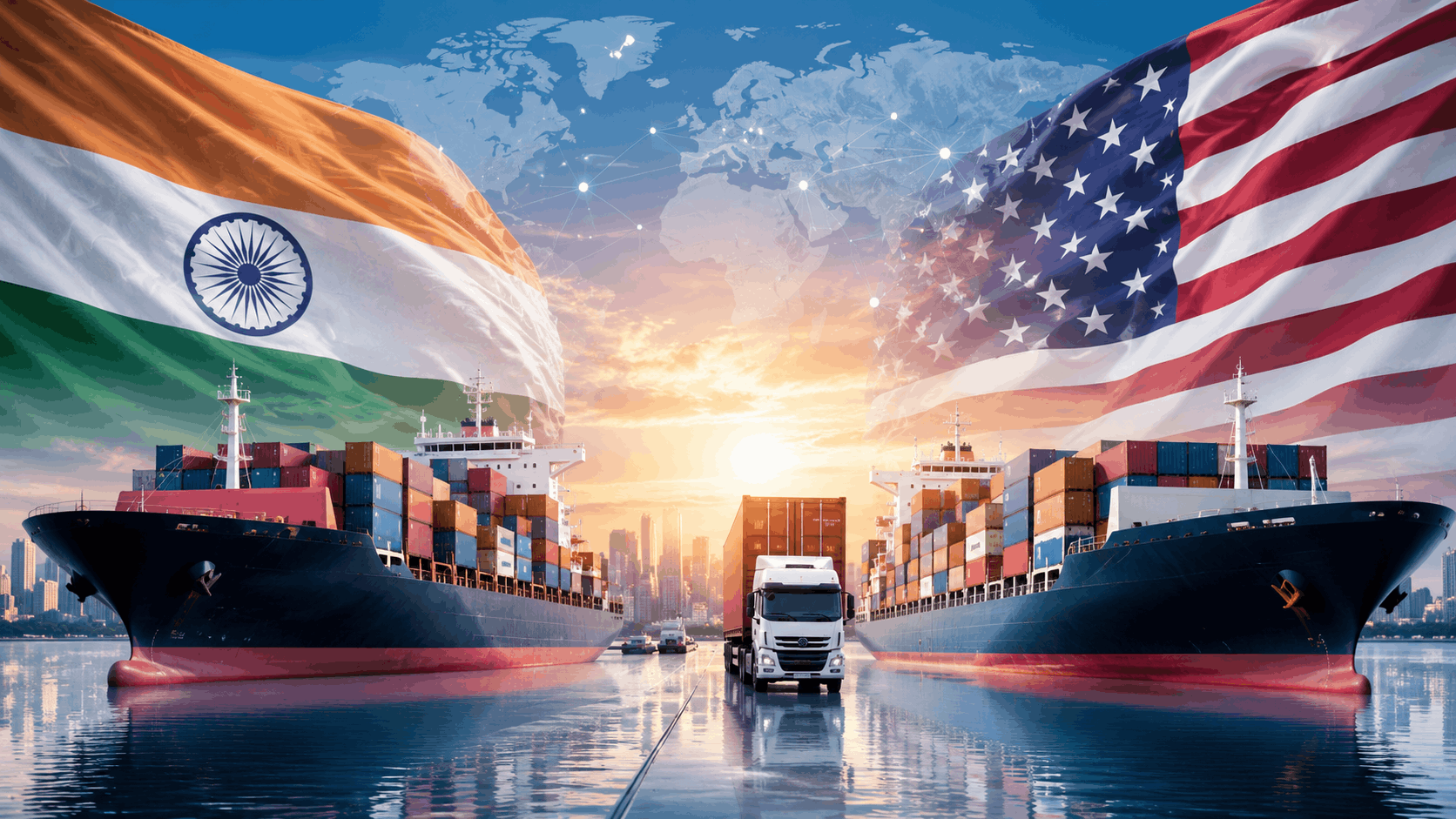
The India-US Trade Deal continues to be one of the most closely watched developments in global business and finance. As two of the world’s largest economies strengthen their economic partnership, businesses, investors, and policymakers are monitoring the latest negotiations and agreements that could reshape international trade.
In 2026, discussions focus on expanding bilateral trade, reducing trade barriers, increasing investments, strengthening supply chains, and promoting technology cooperation. A successful trade agreement could create new opportunities for exporters, manufacturers, technology firms, and global investors.
Table of Contents
Overview of the India-US Trade Relationship
India and the United States have developed one of the fastest-growing economic partnerships in recent years. Bilateral trade has expanded across multiple industries, including technology, pharmaceuticals, manufacturing, agriculture, defense, renewable energy, and digital services.
The relationship is supported by:
- Growing foreign direct investment (FDI)
- Technology partnerships
- Digital economy cooperation
- Supply chain diversification
- Expanding services exports
- Strategic economic collaboration
As global businesses diversify manufacturing and sourcing, India has become an increasingly important trade partner for the United States.
Latest Updates on the India-US Trade Deal in 2026
Trade negotiations in 2026 continue to focus on improving market access and strengthening economic cooperation.
Key discussion areas include:
Tariff Reductions
Negotiators continue exploring opportunities to lower tariffs on selected goods to improve bilateral trade.
Technology Cooperation
Both countries are expanding partnerships in semiconductors, artificial intelligence, cloud computing, cybersecurity, and advanced manufacturing.
Supply Chain Resilience
Reducing dependence on single-country manufacturing remains a major priority, encouraging investment across strategic industries.
Digital Trade
Digital commerce, data services, and cross-border technology investments remain important areas of cooperation.
Energy Collaboration
Clean energy, LNG exports, renewable energy projects, and sustainable infrastructure investments continue expanding.
These developments are expected to support long-term economic growth for both countries.
Economic Impact on Businesses and Investors
The India-US Trade Deal could generate significant economic benefits across multiple sectors.
Potential impacts include:
- Increased export opportunities
- Higher foreign investment
- Manufacturing expansion
- Job creation
- Technology transfer
- Improved business confidence
- Greater supply chain diversification
Investors often monitor trade developments because stronger international cooperation can positively influence market sentiment and corporate earnings in export-oriented industries.
Industries That Could Benefit the Most
Several industries are expected to benefit if trade cooperation continues expanding.
Information Technology
Indian IT companies and U.S. technology firms continue strengthening business partnerships.
Pharmaceuticals
Healthcare and pharmaceutical exports remain an important area of bilateral trade.
Manufacturing
Electronics, automotive components, industrial equipment, and advanced manufacturing continue attracting investment.
Semiconductor Industry
Growing cooperation on semiconductor production and supply chains may support future technological development.
Renewable Energy
Both countries continue investing in clean energy technologies and sustainable infrastructure.
These industries may experience stronger investment activity as economic cooperation expands.
Future Outlook for India-US Trade Relations
Economic experts expect bilateral trade to continue growing throughout 2026 and beyond.
Future priorities include:
- Stronger investment partnerships
- Expanded digital economy cooperation
- Advanced manufacturing
- Artificial Intelligence collaboration
- Semiconductor production
- Green energy initiatives
- Supply chain modernization
Although negotiations may continue evolving, the long-term outlook remains positive due to increasing economic integration between both countries.
Why the India-US Trade Deal Matters in Business and Finance
Trade agreements influence economic growth, corporate profitability, investment flows, and financial markets.
For businesses, stronger trade relations create opportunities to expand exports, reduce operational costs, and enter new markets.
For investors, developments in international trade often affect stock market performance, foreign investment trends, currency movements, and sector-specific growth opportunities.
Monitoring the India-US Trade Deal helps businesses and investors better understand future economic trends and potential investment opportunities.
The India-US Trade Deal 2026 represents an important step toward deeper economic cooperation between two major global economies. Continued progress in trade negotiations could strengthen investment, manufacturing, technology collaboration, and supply chain resilience.
While negotiations may continue to evolve, businesses and investors should closely monitor policy developments as they may influence long-term economic growth and financial market opportunities.

References
- The Outlook for India’s Economy in 2026 amid A New US Trade Deal
- India–US Trade: Exports, Imports & Bilateral Economic Relations
- Fact Sheet: The United States and India Announce Historic Trade Deal
- Trump tariffs uncertainty: Indian exporters see more enquiries from US, but not many orders - here’s why


