
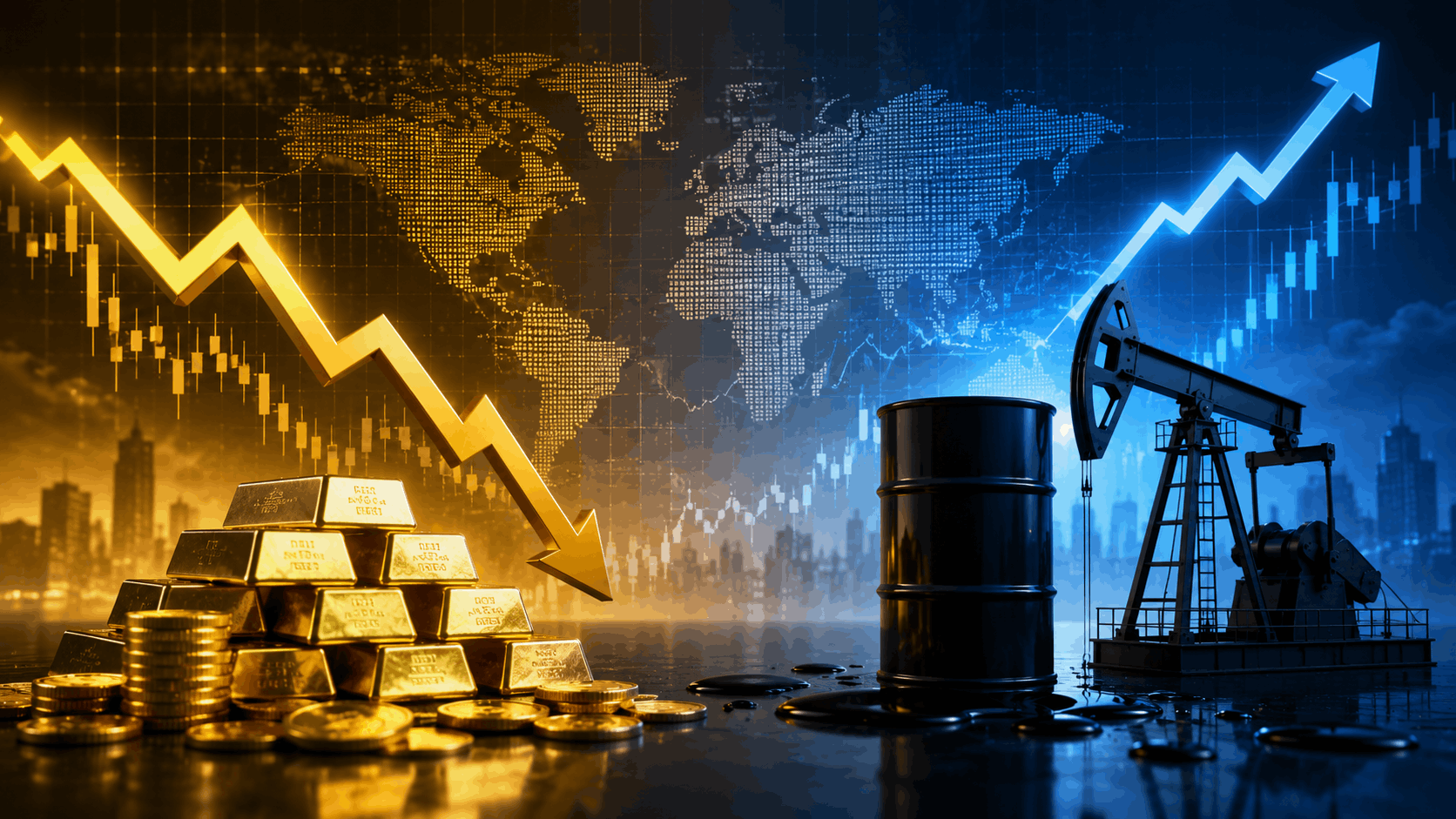
Commodity markets have entered a volatile phase in 2026, with gold prices declining while oil prices continue to rise. This unusual market trend has caught the attention of investors looking to rebalance their portfolios amid inflation concerns, geopolitical uncertainty, and changing central bank policies.
While higher oil prices often signal stronger energy demand and inflationary pressures, falling gold prices may present an opportunity for long-term investors. The key question is whether now is the right time to buy the dip or wait for further market confirmation.
Table of Contents
Why Are Gold Prices Falling in 2026?
Several economic factors are contributing to weaker gold prices despite ongoing market uncertainty.
Stronger U.S. Dollar
A stronger dollar typically puts downward pressure on gold because the metal becomes more expensive for international buyers.
Higher Interest Rates
Higher bond yields reduce the attractiveness of non-yielding assets like gold.
Profit-Taking by Investors
After previous rallies, some investors are locking in profits, creating short-term selling pressure.
Improved Market Sentiment
When investors become more optimistic about economic growth, demand for safe-haven assets such as gold often declines.
Why Oil Prices Continue to Rise
Unlike gold, oil prices are benefiting from strong global demand and tighter supply.
Major factors include:
- OPEC+ production management
- Rising global energy consumption
- Seasonal travel demand
- Geopolitical supply concerns
- Industrial recovery
- Strong transportation activity
Higher oil prices often increase inflation expectations, affecting both businesses and consumers worldwide.
Should Investors Buy the Gold Dip?
Buying gold during price corrections can offer long-term opportunities, but investors should evaluate several factors before making decisions.
Potential advantages include:
- Portfolio diversification
- Inflation protection
- Long-term wealth preservation
- Lower entry prices
- Reduced portfolio volatility
However, investors should also consider:
- Interest rate trends
- Economic growth forecasts
- Currency movements
- Overall market conditions
Rather than investing all at once, many financial experts recommend gradual investing through dollar-cost averaging during periods of volatility.
Future Outlook for Gold and Oil Markets
Market analysts expect both commodities to remain highly sensitive to global economic developments throughout 2026.
Important factors to monitor include:
- Federal Reserve interest rate decisions
- Inflation data
- Global economic growth
- OPEC+ production policies
- Geopolitical developments
- Currency fluctuations
- Industrial demand
Gold and oil may continue moving differently depending on changing macroeconomic conditions, creating opportunities for diversified investors.
Why Gold and Oil Matter in Business and Finance
Gold and oil are two of the world’s most influential commodities.
Their prices affect:
- Stock markets
- Inflation
- Consumer spending
- Manufacturing costs
- Energy prices
- Investment portfolios
- Central bank policies
Businesses monitor oil prices to manage operating costs, while investors often use gold as a hedge during uncertain economic periods.
The recent trend of falling gold prices and rising oil prices reflects the complex relationship between inflation, interest rates, energy demand, and investor sentiment. Although gold has weakened in the short term, it continues to serve as an important diversification asset for many long-term investors.
Before buying the dip, investors should carefully evaluate their financial goals, risk tolerance, and broader market conditions while maintaining a diversified investment strategy.
